
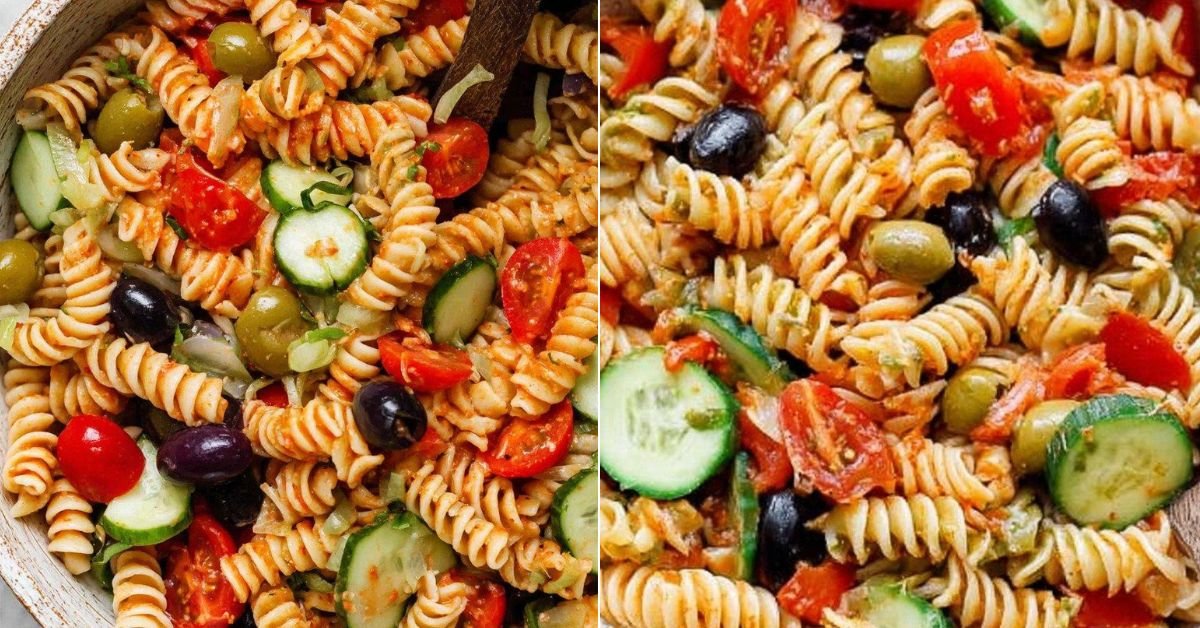
What I Learned Testing Zesty Italian Pasta Salad
Cold pasta salad can go wrong fast: bland pasta, watery dressing, and vegetables that taste tired by the next day. I’m Evelyn, and my first zesty italian pasta salad test looked colorful but tasted flat after chilling. I kept adjusting the pasta texture, draining time, dressing amount, and seasoning in separate batches until I discovered the real fix: rinse the fusilli cold, drain it well, season boldly, then refresh it before serving. That small step made this cold italian pasta salad feel like the calm, reliable summer side I want for family cookouts and easy Sunday lunches.
Table of Contents
- 1) What I Learned Testing Zesty Italian Pasta Salad
- 2) Key Takeaways
- 3) Easy Zesty Italian Pasta Salad Recipe
- 4) Why Most Zesty Italian Pasta Salad Recipes Fail
- 5) Ingredients for Zesty Italian Pasta Salad
- 6) How to Make Zesty Italian Pasta Salad
- 7) Recipe Card: Zesty Italian Pasta Salad
- 8) Tips for Making Zesty Italian Pasta Salad
- 9) Common Mistakes & Fixes
- 10) How to Tell Zesty Italian Pasta Salad Has the Right Texture
- 11) Professional Secrets Behind Better Zesty Italian Pasta Salad
- 12) Best Dishes or Pairings to Serve With Zesty Italian Pasta Salad
- 13) Making Zesty Italian Pasta Salad Ahead of Time
- 14) Storing Leftover Zesty Italian Pasta Salad
- 15) FAQ (Real Cooking Questions)
- 16) Save This Zesty Italian Pasta Salad Recipe
- 17) Conclusion
- 18) Nutrition
2) Key Takeaways
- Cook the fusilli al dente: Pasta softens slightly as it sits with dressing, so starting with firm spirals protects the final texture.
- Drain after rinsing: Cold water stops the cooking, but leftover rinse water can thin the pasta salad dressing and make the salad taste weak.
- Season in layers: Start with part of the Salad Supreme seasoning, toss thoroughly, taste, then adjust so the flavor is bold without becoming salty.
- Refresh before serving: This zesty pasta salad tastes better after chilling, but the pasta absorbs dressing, so a final splash brings back the glossy, tangy finish.
3) Easy Zesty Italian Pasta Salad Recipe
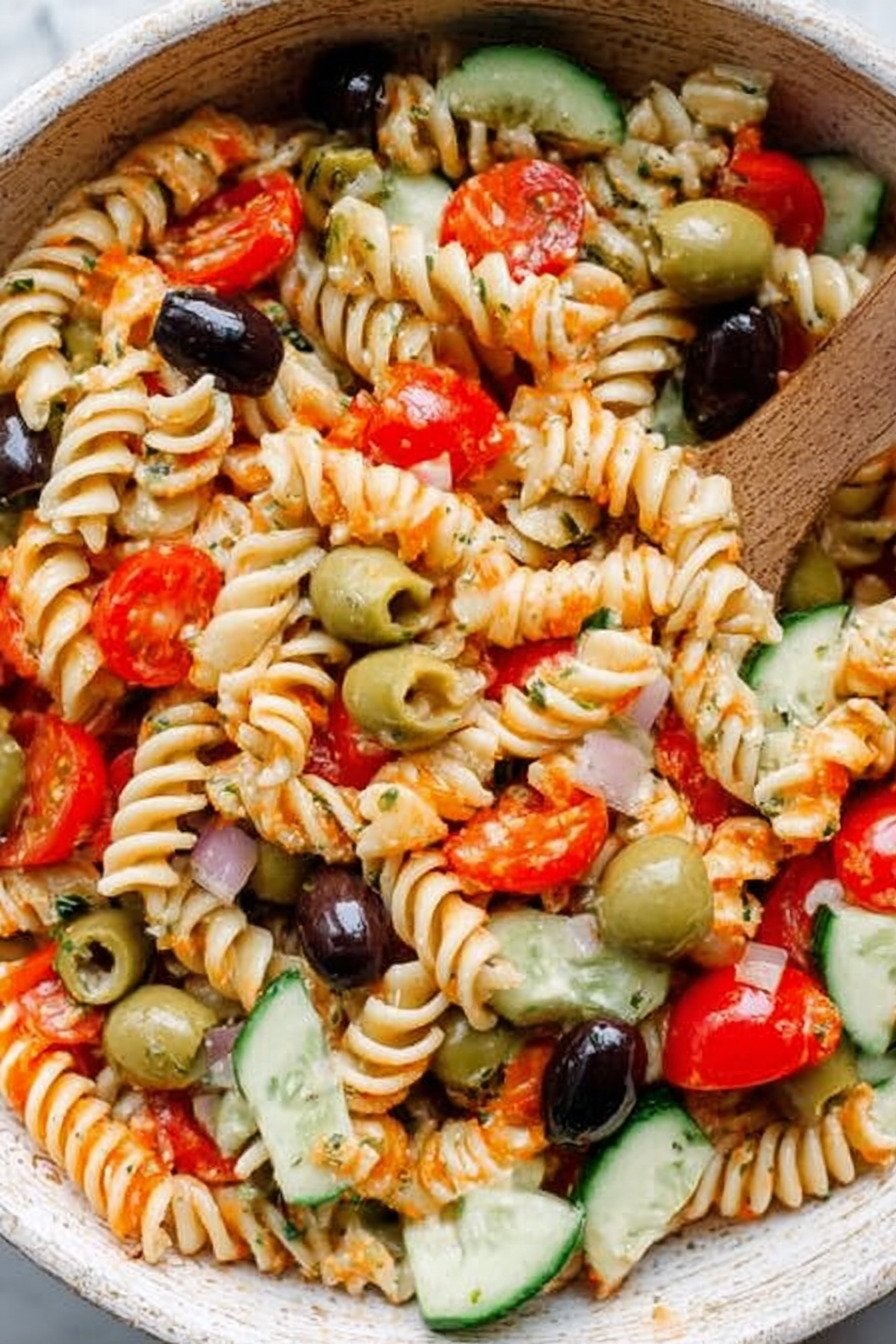
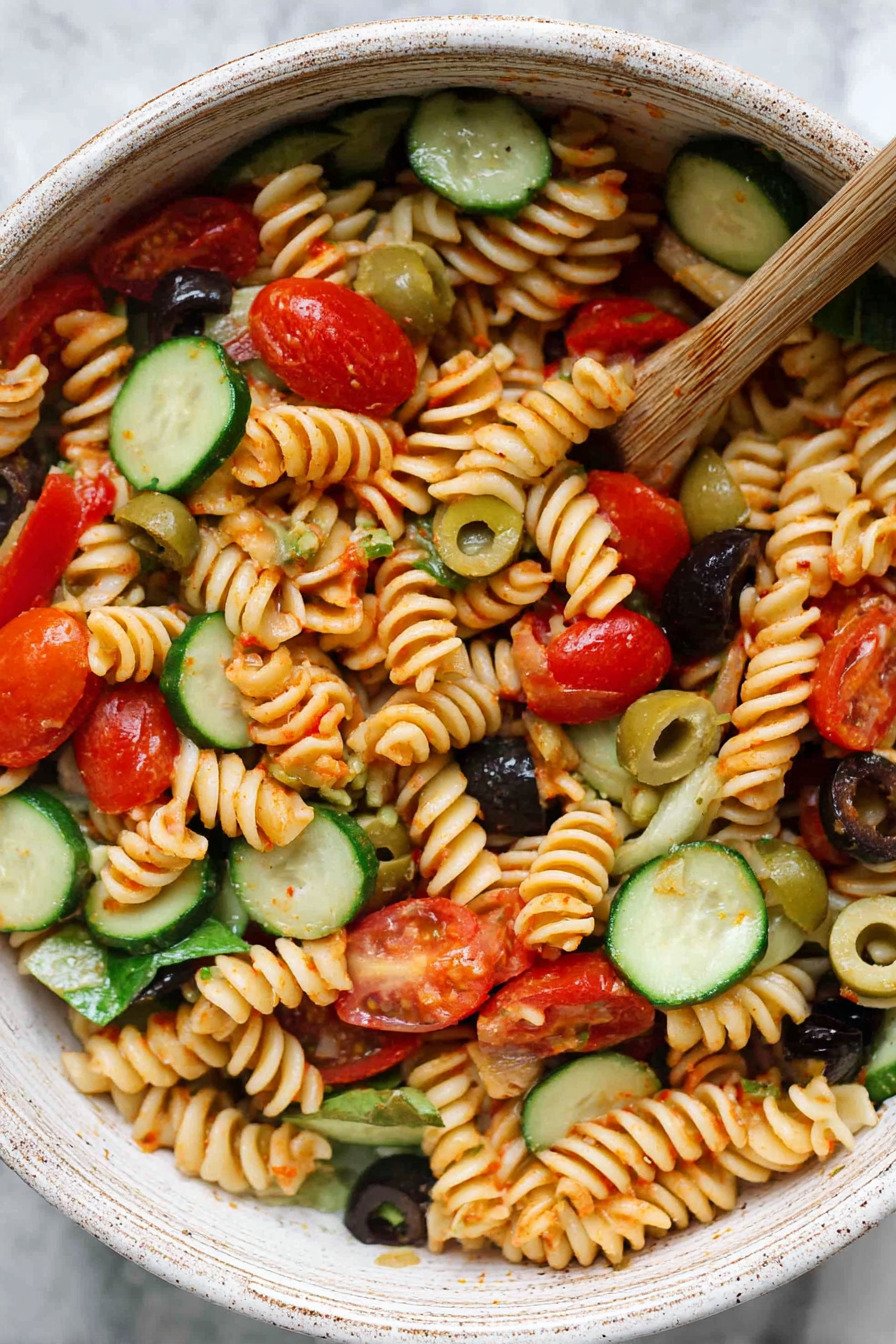
This easy cold pasta salad works because it respects what chilled pasta actually does. Fusilli has ridges and spirals that catch dressing, seasoning, olive brine, and tomato juices, but it also continues soaking up moisture in the refrigerator. That is why the method matters as much as the ingredient list. The pasta is cooked just until al dente, rinsed cold to stop carryover cooking, and drained well before mixing. The vegetables bring freshness and crunch, while the olives bring enough salt and briny depth to keep the salad from tasting like plain noodles with dressing.
The goal is a classic pasta salad that feels bright, chilled, and balanced rather than oily, watery, or dull. When the dressing coats the pasta instead of pooling at the bottom, every bite tastes seasoned. When the cucumber is diced evenly and the tomatoes are not overly wet, the salad stays crisp. When the seasoning is adjusted after tossing, the final bowl has the tangy, savory flavor that makes summer pasta salad recipes worth saving.
4) Why Most Zesty Italian Pasta Salad Recipes Fail
Most zesty italian pasta salad recipes fail for one of five practical reasons. The first is overcooked pasta. If fusilli goes past al dente, it becomes soft, swells in the dressing, and loses the springy bite that makes a cold salad pleasant. The fix is to cook it only until firm-tender, then rinse it immediately with cold water.
The second failure is poor draining. Rinsing pasta is helpful for a cold italian pasta salad because it cools the noodles and removes surface starch, but water trapped inside the spirals weakens the dressing. Shake the colander well and let the pasta sit for a minute before mixing. If the dressing tastes thin within minutes, excess water is usually the reason.
The third issue is flat flavor. Pasta absorbs salt, acidity, herbs, and oil, especially after chilling. A salad that tastes strong at first may taste muted the next day. This method prevents that by using zesty Italian dressing and Salad Supreme seasoning, then tasting and adjusting before serving.
The fourth problem is watery vegetables. Cucumbers and tomatoes add freshness, but large wet pieces can dilute the bowl. Dice the cucumber neatly, use ripe but not mushy tomatoes, and choose cherry tomatoes when you want less juice. The fifth failure is serving straight from the fridge without stirring. Pasta salad needs a final toss because dressing settles and absorbs unevenly as it sits.
5) Ingredients for Zesty Italian Pasta Salad
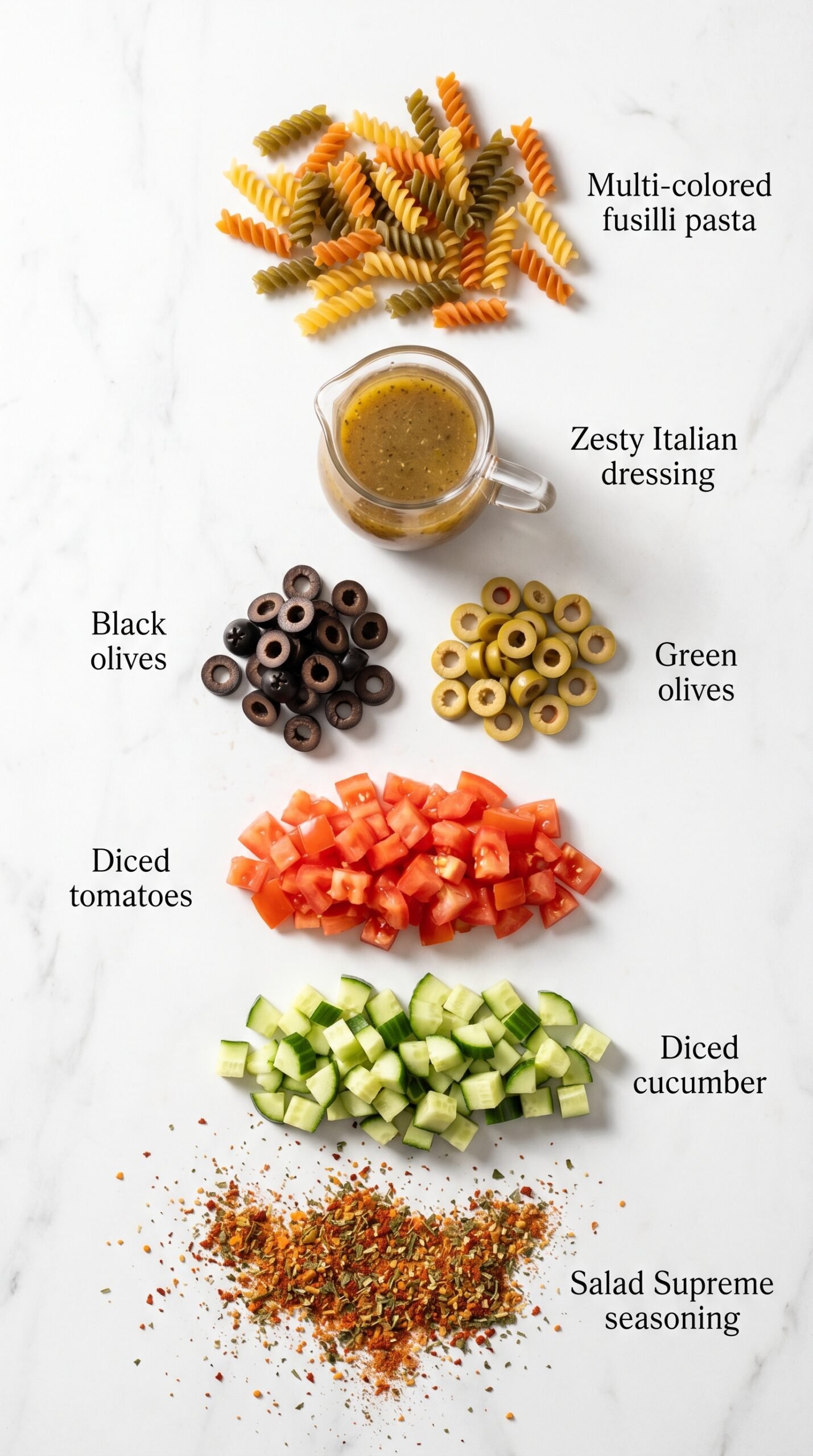
Multi-colored fusilli pasta: Fusilli is ideal because the spirals hold dressing, seasoning, and small pieces of olive and vegetable. Use it when you want a pasta salad that stays flavorful after chilling. If replaced with a smoother pasta shape, the dressing may slide off more easily.
Large black olives: Black olives add mellow saltiness and a soft, savory bite. Slice them so they distribute evenly instead of dominating a few forkfuls. If you reduce them too much, the salad may taste less rounded.
Green olives: Green olives bring sharper briny flavor that makes the salad taste zesty rather than plain. Use them when you want a brighter, more picnic-style pasta salad. If replaced with only black olives, the flavor becomes milder.
Cucumber: Cucumber adds crunch and cool freshness. Dice it shortly before mixing so it stays crisp. If the cucumber is watery or cut too large, it can dilute the dressing and make the salad feel less balanced.
Tomatoes: Beefsteak, Roma, or cherry tomatoes add juiciness and color. Roma tomatoes are firmer, cherry tomatoes hold their shape well, and beefsteak tomatoes give a softer, juicier bite. If the tomatoes are overly ripe, drain off extra liquid before mixing.
Zesty Italian salad dressing: This is the main pasta salad dressing, bringing acidity, herbs, oil, and tang. Use enough to coat the pasta thoroughly, then keep extra for refreshing the salad later. If you add all the dressing too early, the pasta may absorb it before serving.
Salad Supreme seasoning: This seasoning adds savory depth, color, and a classic deli-style pasta salad flavor. Start with the lower amount, toss, taste, and build from there. Adding too much at once can make the salad saltier than intended.
- Fusilli vs smoother pasta: Fusilli catches dressing in its ridges, while smoother shapes can taste less seasoned unless tossed more carefully.
- Roma tomatoes vs beefsteak tomatoes: Roma tomatoes are firmer and less watery, while beefsteak tomatoes bring a juicier bite that may need extra draining.
- Adding dressing once vs refreshing later: A single dressing addition can disappear into the pasta overnight; refreshing before serving restores shine and tang.
- Seasoning early vs seasoning in stages: Seasoning in stages gives control, especially because chilled foods often taste less salty and less acidic.
6) How to Make Zesty Italian Pasta Salad
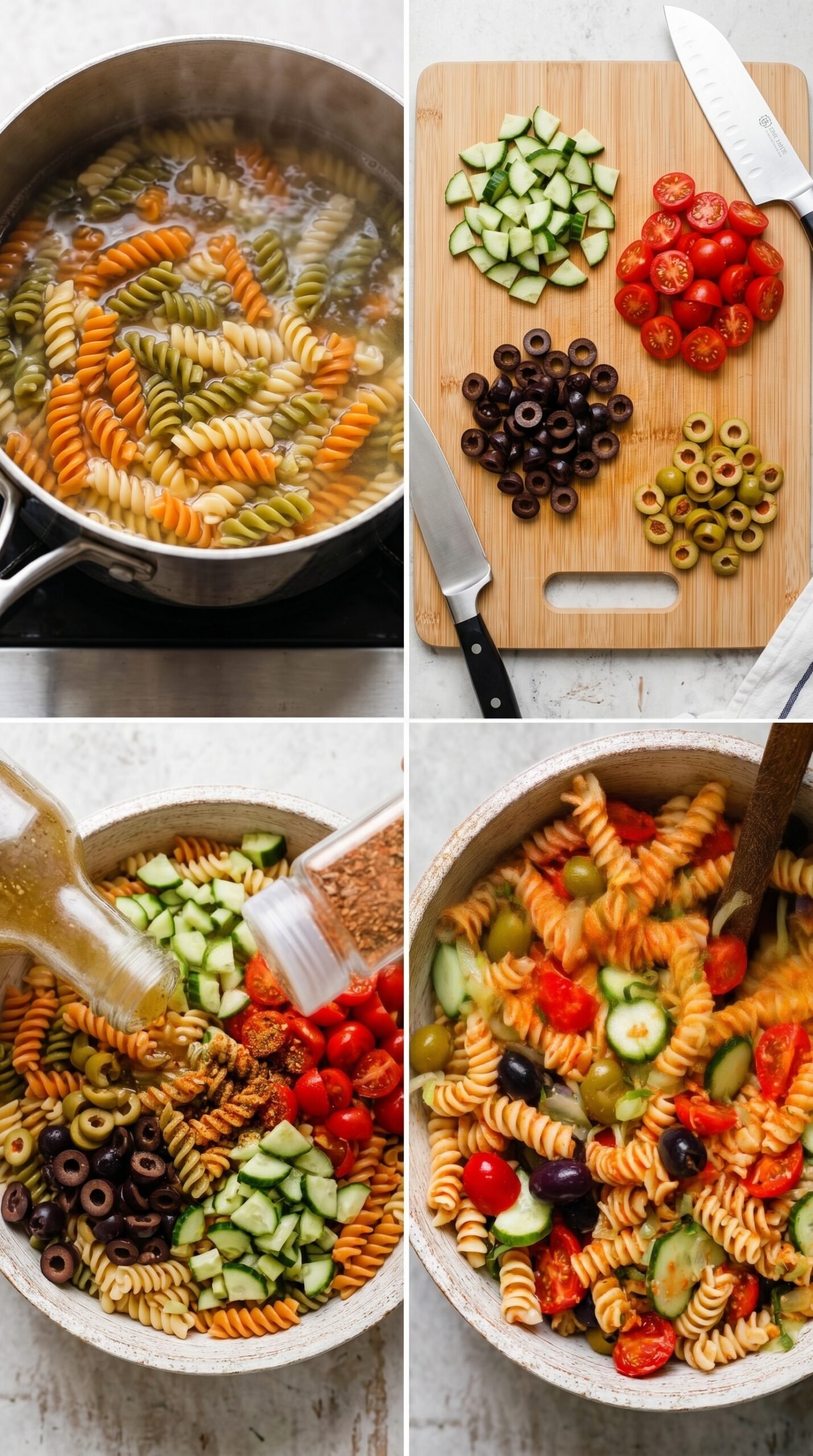
Step 1: Boil the fusilli in salted water until it is al dente. The pasta should bend easily but still have a firm center when tasted. Drain it, rinse it under cold water, and shake the colander well so the salad does not start watery.
Step 2: Place the cooled pasta in a large mixing bowl. Add the sliced black olives, sliced green olives, diced cucumber, and diced tomatoes. The bowl should look colorful and evenly mixed before the dressing goes in.
Step 3: Pour in the zesty Italian dressing and add the first portion of Salad Supreme seasoning. Toss from the bottom of the bowl upward so the dressing reaches the pasta spirals and the vegetables do not stay clumped in one area.
Step 4: Taste the salad after mixing. If it tastes mild, add more seasoning. If it looks dry or the pasta tastes under-coated, add more dressing. Adjust gradually because the olives and seasoning both contribute salt.
Step 5: Serve right away for a fresh, crisp salad, or refrigerate it for deeper flavor. If serving the next day, stir well and add enough extra dressing to restore a moist, glossy coating without leaving a puddle at the bottom.
7) Recipe Card: Zesty Italian Pasta Salad
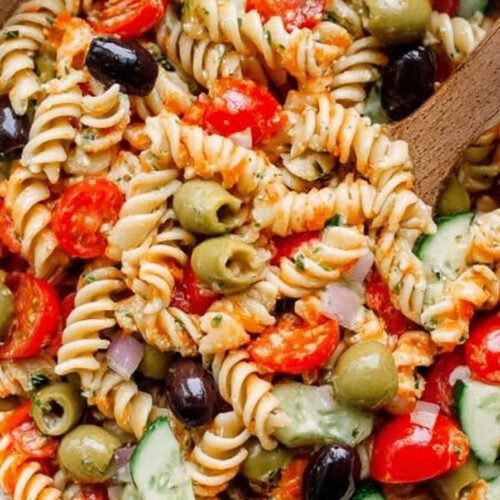
Zesty Italian Pasta Salad with Olives, Cucumber, and Tomato
Ingredients
- 12 oz multi-colored fusilli pasta, cooked just to al dente so the spirals hold their shape after chilling
- 1/2 can large black olives, pitted, approximately 20 olives, sliced into 2 to 3 slices each for salty depth
- 1/2 small jar green olives, approximately 20 olives, sliced into 2 to 3 slices each for briny contrast
- 1/2 medium cucumber, diced small enough to blend through the pasta without watering it down
- 1 large beefsteak tomato or 3 Roma tomatoes, diced, or 1 cup halved cherry tomatoes for juicy freshness
- 1 cup zesty Italian salad dressing, plus more as needed because the pasta absorbs dressing as it sits
- 2-4 tablespoons McCormick Perfect Pinch – Salad Supreme seasoning, plus more as needed for a bold seasoned finish
Instructions
- Cook the fusilli in a large pot of salted boiling water according to the package directions until al dente. Drain well, then rinse under cold water to stop the cooking and cool the pasta for salad. Shake off excess water so the dressing does not become diluted.
- Transfer the drained pasta to a large mixing bowl. Add the sliced black olives, sliced green olives, diced cucumber, and diced tomatoes. Pour in 1 cup of zesty Italian dressing and start with 2 tablespoons of Salad Supreme seasoning. Toss thoroughly until every spiral is coated and the vegetables are evenly distributed.
- Taste the salad and adjust gradually with 1 to 2 more tablespoons of Salad Supreme seasoning and extra zesty Italian dressing until the flavor is bright, savory, and balanced. Add more olives, tomatoes, or cucumber only if you want a chunkier salad with more texture.
- Serve immediately if needed, or cover and refrigerate for better flavor after several hours or overnight. Before serving the next day, stir well and add more Italian dressing as needed because the pasta will continue to absorb the dressing while it chills.
8) Tips for Making Zesty Italian Pasta Salad
The best tip for zesty italian pasta salad is to treat the pasta like an ingredient that keeps changing after you cook it. It does not stop absorbing flavor when the bowl goes into the refrigerator. That is why a salad can taste balanced at night and dry by lunch the next day. Keep a little extra dressing available and add it after chilling, not just at the beginning.
Use a large bowl so you can toss without crushing the tomatoes. Pasta salad needs room for the dressing to move around the ingredients. A cramped bowl leads to uneven seasoning, with some bites tasting sharp and others tasting plain. Toss gently but thoroughly, scraping up from the bottom where dressing and seasoning settle.
Let the pasta cool fully before combining it with the vegetables. Warm pasta can soften cucumber, release tomato juices faster, and make the dressing feel oily. For the cleanest texture, rinse the pasta cold, drain it well, and mix only when the noodles no longer feel warm to the touch.
For stronger flavor, chill the salad for several hours. For the crispest texture, serve it the same day. For the best balance, chill it overnight and refresh with dressing just before serving. That gives you the deeper flavor of a make-ahead salad without the dry texture that often ruins cold pasta dishes.
9) Common Mistakes & Fixes
Problem: The pasta salad tastes bland after chilling. Cause: The pasta absorbed the dressing and the cold temperature muted the seasoning. Fix: Stir well, add more zesty Italian dressing, and adjust with a small amount of Salad Supreme seasoning before serving.
Problem: The salad is watery at the bottom. Cause: The pasta was not drained well after rinsing, or the tomatoes and cucumber released too much liquid. Fix: Shake the pasta dry, dice vegetables evenly, and drain extra tomato juice before mixing.
Problem: The fusilli is mushy. Cause: The pasta cooked past al dente before being rinsed. Fix: Start checking a minute before the package time ends and rinse immediately once the pasta is firm-tender.
Problem: The salad tastes too salty. Cause: Olives, dressing, and seasoning all bring salt. Fix: Add seasoning in stages, and if needed, balance with more plain pasta, cucumber, or tomato rather than adding more dressing.
Problem: The dressing does not cling. Cause: Excess water or warm pasta prevents a clean coating. Fix: Cool and drain the pasta fully before mixing, then toss until the fusilli looks lightly glossy.
10) How to Tell Zesty Italian Pasta Salad Has the Right Texture
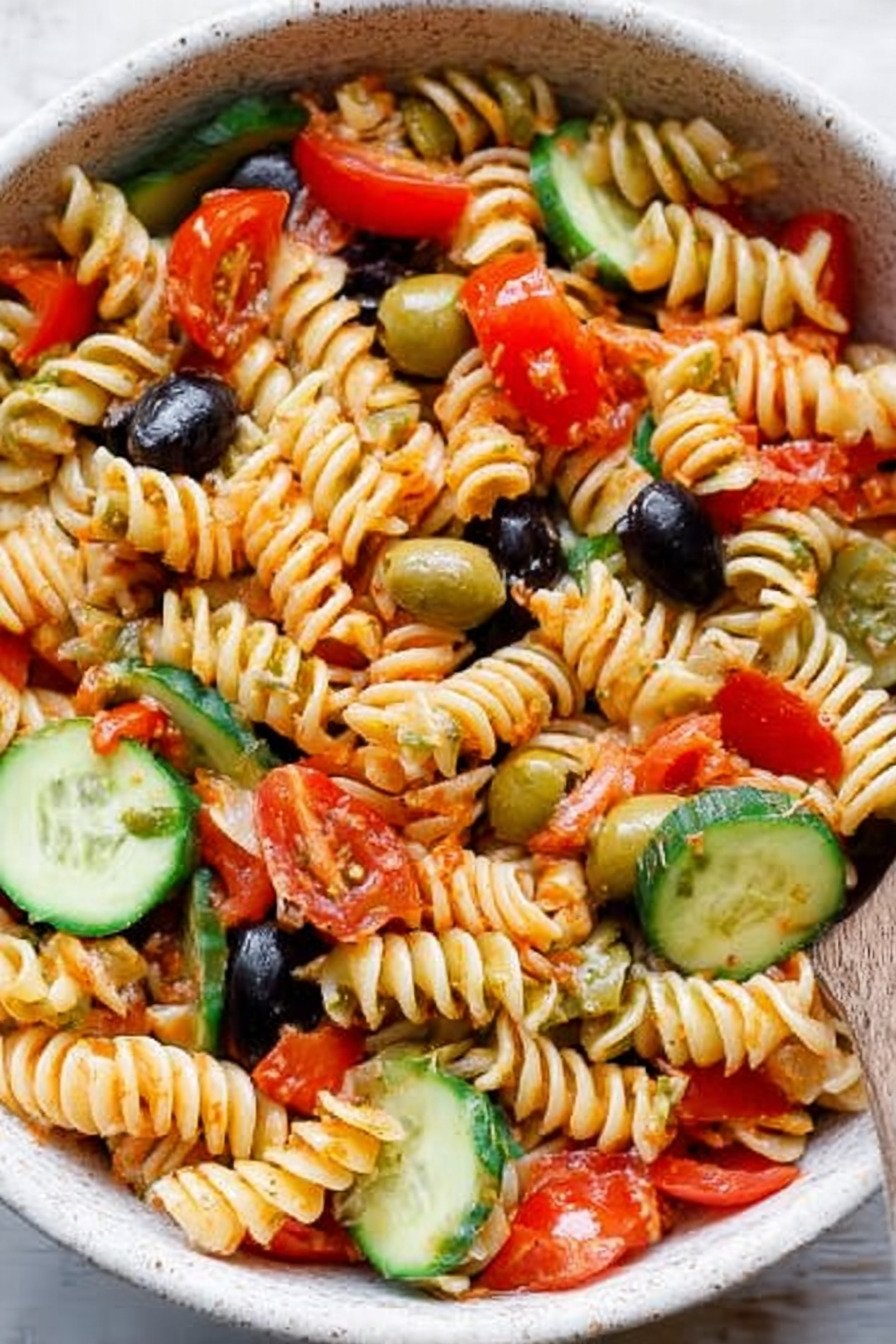
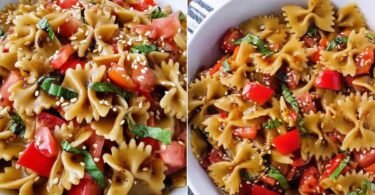
Zesty italian pasta salad has the right texture when the fusilli is firm but not hard, cool but not stiff, and coated without looking oily. Visually, the pasta should have a light sheen from the dressing, not a puddle at the bottom of the bowl. The olives should be evenly scattered, the cucumber should look crisp, and the tomatoes should hold their shape instead of collapsing into the dressing.
The texture should feel refreshing and scoopable. You should get a little chew from the pasta, briny softness from the olives, crunch from cucumber, and juiciness from tomato. The flavor should be tangy, savory, and bright, with the seasoning present but not gritty. The aroma should smell like herbs, vinegar, olives, and fresh vegetables. Failure signs include limp pasta, watery dressing, dry noodles, mushy tomatoes, or a salty finish that overwhelms the vegetables.
11) Professional Secrets Behind Better Zesty Italian Pasta Salad
The first professional secret is controlled moisture. Cold salads fail when water and dressing fight each other. Rinsing pasta is correct for this type of recipe, but only if the pasta is drained thoroughly afterward. A few extra shakes in the colander can make the difference between a dressing that clings and a dressing that tastes diluted.
The second secret is delayed adjustment. Many cooks season pasta salad only once, right after mixing. A better method is to season, chill, taste again, and adjust. This matters because cold temperatures dull flavor, and pasta keeps absorbing dressing. The final adjustment is not a rescue step; it is part of the method.
The third secret is ingredient size. Olives sliced into smaller pieces give more consistent briny flavor. Cucumber diced into bite-size pieces adds crunch without taking over. Tomatoes cut neatly bring juice without turning the bowl messy. When every ingredient is easy to catch on a fork with the fusilli, the salad tastes complete in each bite.
12) Best Dishes or Pairings to Serve With Zesty Italian Pasta Salad
Zesty italian pasta salad works especially well with grilled chicken, burgers, steak skewers, roasted vegetables, turkey sandwiches, and simple picnic plates. The tangy dressing cuts through richer foods, while the chilled pasta and cucumber bring a cooling contrast. For a summer table, serve it beside grilled corn, sliced watermelon, marinated chicken, or a crisp green salad.
For lunch, pair it with rotisserie chicken, tuna salad, or hard-boiled eggs. For a potluck, place it next to smoky barbecue, baked beans, or grilled sausages because the acidity keeps the plate from feeling heavy. If you want a lighter meal, serve a smaller portion over chopped romaine or alongside fresh fruit.
13) Making Zesty Italian Pasta Salad Ahead of Time
This is one of those summer pasta salad recipes that benefits from make-ahead time, as long as you plan for absorption. Make the salad several hours ahead or up to one day before serving. Cover it tightly and refrigerate it so the pasta can take in the dressing and the olive flavor can spread through the bowl.
The key is not to expect the salad to be finished the moment it leaves the refrigerator. Stir it thoroughly, then add more zesty Italian dressing until the pasta looks lightly glossy again. Taste before serving and adjust with a small amount of seasoning if needed. If making it for a party, keep a little dressing aside specifically for this final refresh.
14) Storing Leftover Zesty Italian Pasta Salad
Store leftover zesty italian pasta salad in an airtight container in the refrigerator for up to 3 days. Stir before each serving because the dressing settles and the pasta continues to absorb moisture. If the salad looks dry, add a small splash of dressing and toss until the texture returns.
Freezing is not recommended for this salad. The cucumber and tomatoes lose their fresh texture after thawing, and the dressing can separate. For the best leftover experience, serve it cold from the refrigerator or let it sit at cool room temperature briefly before eating. Leftovers can be spooned into lettuce cups, served with grilled protein, or packed as a chilled lunch side.
15) FAQ (Real Cooking Questions)
Can I make this zesty italian pasta salad the night before? Yes. It actually tastes more developed after chilling overnight. Just remember that the pasta will absorb dressing, so stir it well and add more dressing before serving.
Should I rinse pasta for cold italian pasta salad? Yes. Rinsing stops the cooking and cools the pasta quickly. The important part is draining well afterward so the dressing does not become watery.
What pasta shape works best? Fusilli works especially well because the spirals hold dressing and seasoning. Rotini is a close substitute, but avoid very tiny shapes that can become dense or large shapes that are hard to scoop.
How do I keep pasta salad from drying out? Add dressing in stages. Use enough when mixing to coat the pasta, then add more after chilling. This keeps the salad moist without making it oily at the start.
Can I add extra vegetables? Yes, but keep them crisp and not too watery. Extra cucumber, tomatoes, or olives fit naturally. If adding other vegetables, dice them small so they blend with the fusilli instead of weighing down the salad.
16) Save This Zesty Italian Pasta Salad Recipe
If this zesty italian pasta salad helped you solve the dry, bland cold pasta problem, save it for cookouts, meal prep lunches, and summer side dishes. The key reminder is: cook the pasta al dente, drain it well, and refresh the dressing before serving.
17) Conclusion
Once you understand how pasta behaves after chilling, zesty italian pasta salad becomes much easier to control. The recipe is not just about tossing pasta with dressing; it is about building texture, draining away excess water, balancing briny olives with fresh vegetables, and adjusting the dressing at the right time. That is the difference between a bowl that tastes flat and one that stays bright, tangy, and fork-ready. With al dente fusilli, careful draining, staged seasoning, and a final dressing refresh, you can make a cold pasta salad that feels confident instead of unpredictable.
18) Nutrition
Serving Size 1 portion Calories 265 Sugar 4 g Sodium 780 mg Fat 12 g Saturated Fat 2 g Carbohydrates 35 g Fiber 3 g Protein 6 g Cholesterol 0 mg

Leave a Comment