
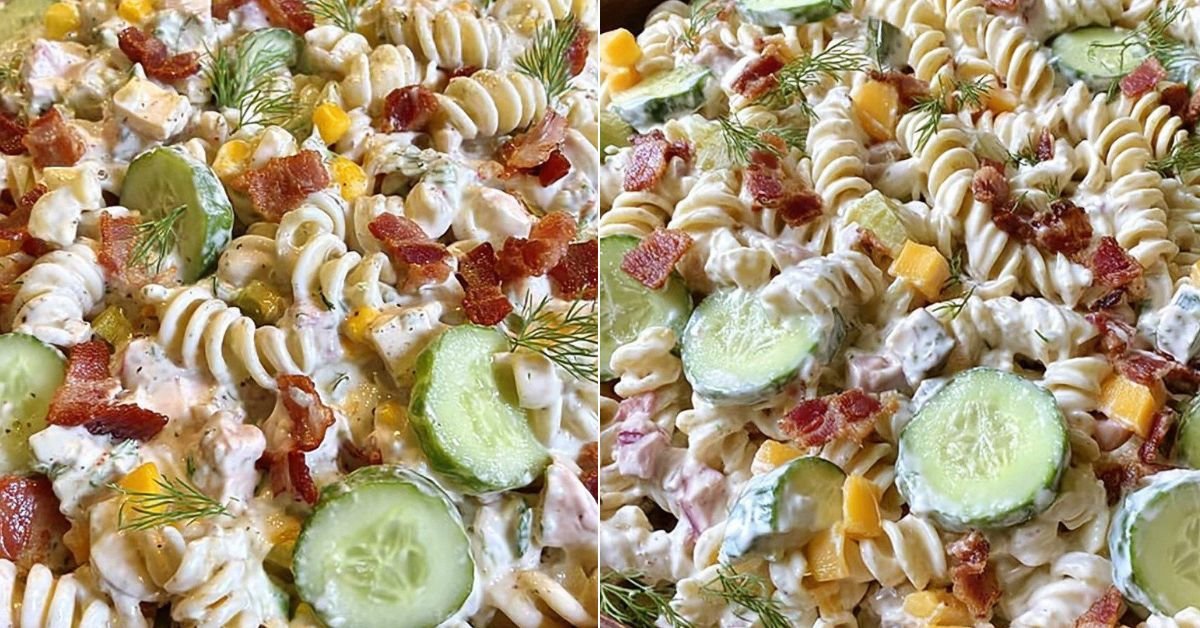
1) What Makes This Dill Pickle Bacon Ranch Pasta Salad Worth Saving
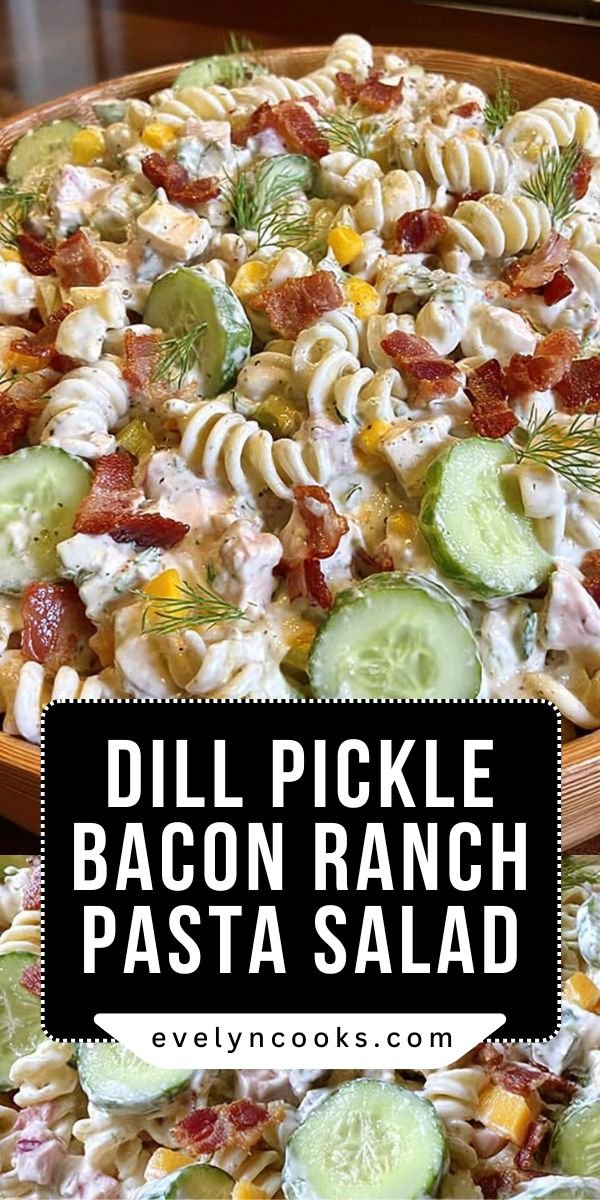
Bland pasta salad is frustrating because it looks creamy but tastes flat after chilling. I’m Evelyn, and I learned that the hard way after one batch turned watery and another buried the bacon under too much dressing. After testing the balance of pickle juice, ranch seasoning, sharp cheddar, and cold pasta, I discovered the trick: cool the pasta completely and let the flavors settle before serving. This dill pickle bacon ranch pasta salad has the tangy crunch, smoky bacon, and creamy ranch bite that reminds me of relaxed summer dinners and the kind of side dish people quietly go back for twice.
Table of Contents
- 1) What Makes This Dill Pickle Bacon Ranch Pasta Salad Worth Saving
- 2) Key Takeaways
- 3) Easy Dill Pickle Bacon Ranch Pasta Salad Recipe
- 4) Why Most Dill Pickle Bacon Ranch Pasta Salad Recipes Fail
- 5) Ingredients for Dill Pickle Bacon Ranch Pasta Salad
- 6) How to Make Dill Pickle Bacon Ranch Pasta Salad
- 7) Recipe Card: Dill Pickle Bacon Ranch Pasta Salad
- 8) Tips for Making Dill Pickle Bacon Ranch Pasta Salad
- 9) Common Mistakes & Fixes
- 10) How to Tell Dill Pickle Bacon Ranch Pasta Salad Has the Right Texture
- 11) Professional Secrets Behind Better Dill Pickle Bacon Ranch Pasta Salad
- 12) Best Dishes or Pairings to Serve With Dill Pickle Bacon Ranch Pasta Salad
- 13) Making Dill Pickle Bacon Ranch Pasta Salad Ahead of Time
- 14) Storing Leftover Dill Pickle Bacon Ranch Pasta Salad
- 15) FAQ (Real Cooking Questions)
- 16) Save This Dill Pickle Bacon Ranch Pasta Salad Recipe
- 17) Conclusion
- 18) Nutrition
2) Key Takeaways
- Cool pasta completely before dressing: Warm pasta loosens mayonnaise and sour cream, making the salad greasy instead of creamy.
- Use sharp cheddar: The stronger cheese flavor stands up to pickle juice, ranch seasoning, bacon, and dill.
- Chill before serving: One hour in the refrigerator gives the dressing time to cling and the pickle flavor time to settle.
- Save some toppings: A little bacon, dill, pickle, and cheese on top keeps the finished bowl looking fresh and textured.
3) Easy Dill Pickle Bacon Ranch Pasta Salad Recipe
This dill pickle bacon ranch pasta salad works because it treats pasta salad like a balance of moisture, texture, salt, acidity, and chilling time. The rotini gives the dressing places to cling, the bacon adds smoky crunch, the pickles bring bright briny bite, and the sharp cheddar keeps the creamy dressing from tasting too heavy. The ranch packet is useful here because it brings dried herbs, garlic-style savoriness, and salt in one concentrated mix, but it needs sour cream, mayonnaise, and pickle juice to become a smooth dressing instead of a dusty seasoning layer.
The goal is not a loose pasta salad swimming in dressing. The goal is a cold, creamy, well-coated pickle bacon pasta salad with enough structure that every spoonful has pasta, bacon, pickle, and cheese. Rinsing the pasta under cold water is important because this is a chilled pasta salad, not a hot sauced pasta dish. Cooling the pasta stops carryover cooking, removes surface starch that can make the dressing pasty, and protects the sour cream and mayonnaise from thinning out too quickly.
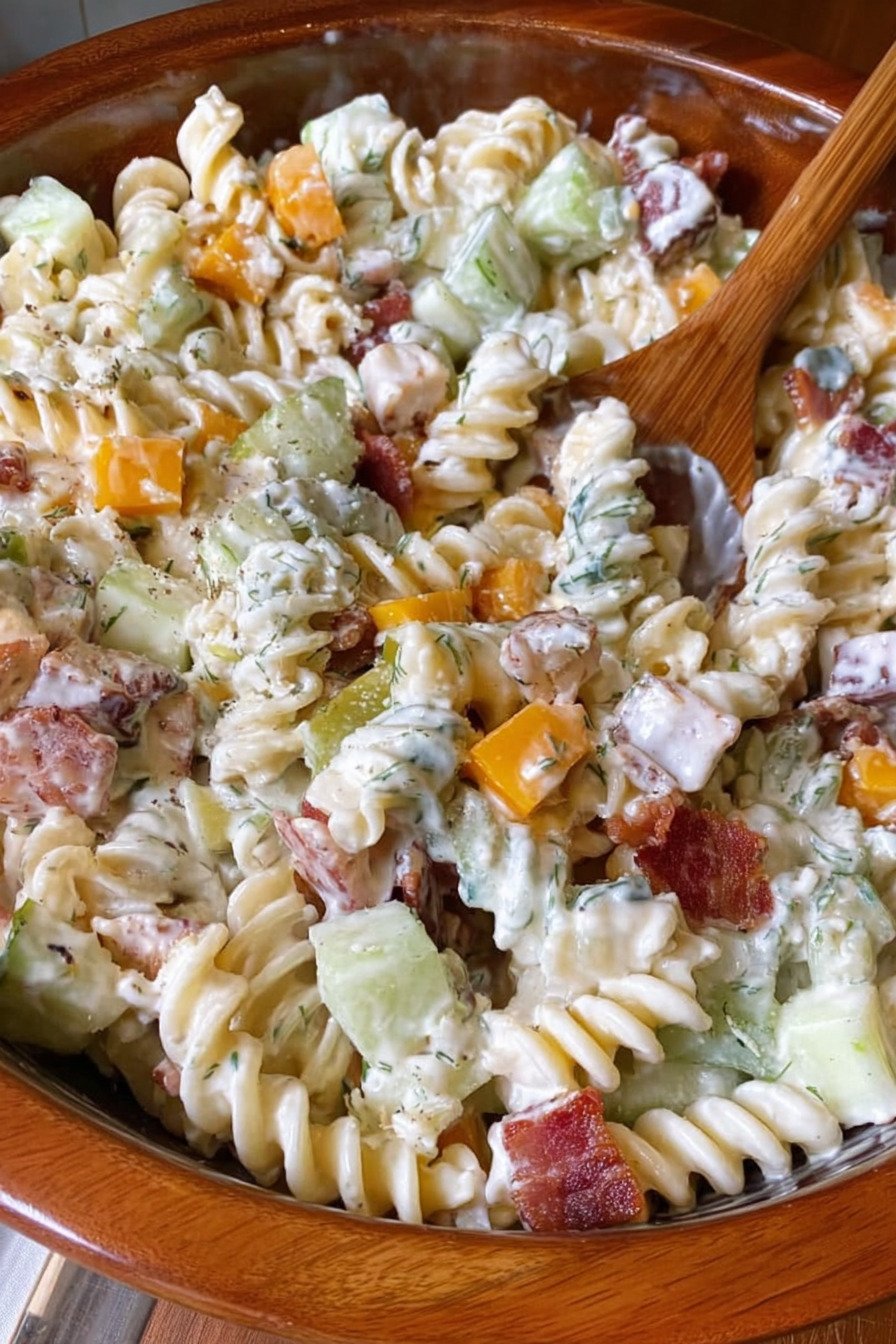
4) Why Most Dill Pickle Bacon Ranch Pasta Salad Recipes Fail
Most dill pickle bacon ranch pasta salad recipes fail because the pasta is dressed while it is still warm. Warm pasta melts the creamy base, and once mayonnaise and sour cream loosen, the dressing can slide to the bottom of the bowl instead of coating the rotini. The fix is simple but non-negotiable: rinse the cooked pasta under cold water until it is fully cooled, then drain it well so extra water does not dilute the dressing.
Another common failure is mushy pasta. Pasta salad needs al dente pasta because the noodles continue to absorb moisture while they chill. If the pasta is overcooked, it becomes soft after one hour in the refrigerator and the salad loses its clean bite. A good batch should feel tender but not limp, with the rotini still holding its twist shape after mixing.
The third problem is flat flavor. Pickle juice adds acidity, ranch seasoning adds savory depth, bacon adds salt and smoke, and sharp cheddar adds a stronger dairy bite. If any of those flavors are weak, the salad can taste creamy but dull. Sharp cheddar matters because mild cheese tends to disappear once it is mixed with ranch and pickles.
The fourth issue is sogginess from wet mix-ins. Chopped dill pickles release liquid as they sit, so the salad needs enough creamy dressing to coat but not so much pickle juice that it becomes watery. If your pickles are especially juicy, let them drain for a moment before folding them in. Finally, bacon can soften if it sits too long in the dressing, which is why saving a little crisp bacon for the top gives the finished salad better contrast.
5) Ingredients for Dill Pickle Bacon Ranch Pasta Salad
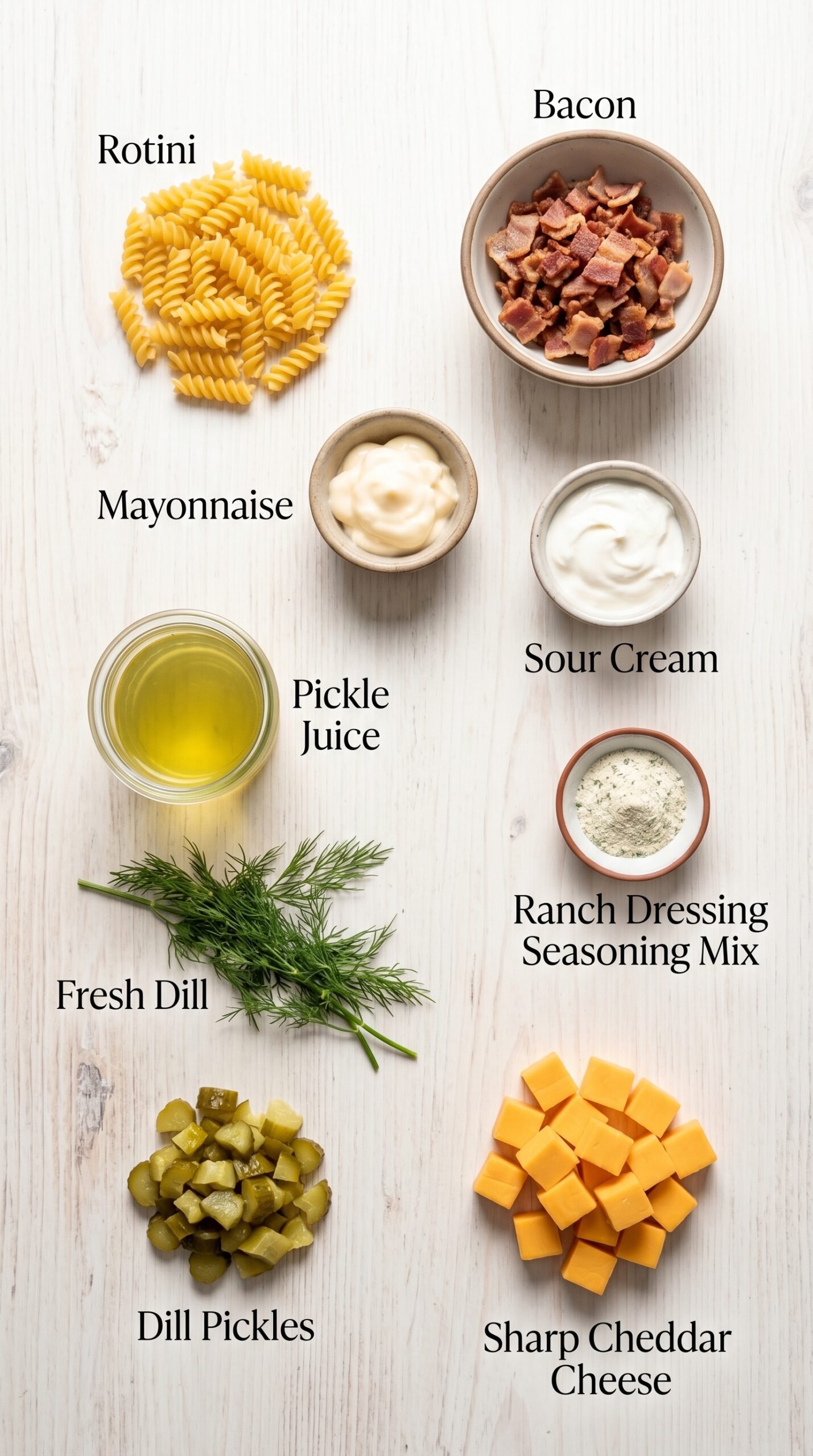
Rotini or another short pasta: Short pasta works best because it holds dressing and mix-ins without becoming hard to serve. Rotini is especially useful because its ridges catch the creamy ranch-pickle dressing. If you use shells, elbows, or penne, choose a shape that can hold up after chilling.
Bacon: Bacon brings smoky saltiness and a crisp bite that keeps the salad from feeling like only soft pasta and dressing. Use it after it is cooked and crumbled. If the bacon is undercooked or greasy, it can make the dressing heavy, so drain it well before adding it.
Mayonnaise: Mayonnaise gives the dressing body and helps it cling to the pasta. Use it when the pasta is fully cooled so it stays creamy. Replacing all of it with a thinner ingredient can make the dressing runny and less satisfying.
Sour cream: Sour cream lightens the mayonnaise and adds tang. It also helps the ranch seasoning taste smoother. If you replace it completely with mayonnaise, the salad becomes richer and heavier; if you replace it with something too thin, the dressing may not coat as well.
Pickle juice: Pickle juice is the flavor bridge between the creamy dressing and chopped dill pickles. It should be mixed into the dressing before the pasta goes in so the acidity spreads evenly. Too much can make the salad watery, so the measured amount matters.
Ranch dressing seasoning mix: This turns the creamy base into a pasta salad with ranch packet flavor without needing extra herbs or spices. Stir it thoroughly so no salty pockets remain. The seasoning needs a few minutes of chilling time to hydrate and mellow into the dressing.
Fresh dill: Dill reinforces the pickle flavor and adds a fresh aroma. Add it to the dressing so the herb flavor spreads through the salad. Dried dill can work, but it tastes more concentrated, so the flavor will be slightly less fresh and grassy.
Dill pickles: Chopped dill pickles provide crunch, acidity, and the signature bite of dill pickle pasta salad with bacon. Roughly chopped pieces are better than tiny mince because they stay noticeable. If the pickles are very wet, a quick drain helps prevent a thin dressing.
Sharp cheddar cheese: Sharp cheddar gives this pickle and cheese pasta salad its savory edge. The stronger flavor stands up to pickle juice, ranch, and bacon. Mild cheddar or soft cheese can taste muted, and shredded cheese can clump, so cubes give better texture.
- Rotini vs smooth pasta: Rotini catches dressing in its twists, while smoother shapes can let the dressing slide off more easily.
- Sharp cheddar vs mild cheddar: Sharp cheddar keeps its flavor in a tangy salad; mild cheddar can disappear behind pickle juice and ranch seasoning.
- Fresh dill vs dried dill: Fresh dill tastes brighter and more aromatic, while dried dill is useful but more concentrated and less crisp.
- Crisp bacon vs soft bacon: Crisp bacon gives contrast; soft bacon blends into the dressing and can make the salad feel heavy.
6) How to Make Dill Pickle Bacon Ranch Pasta Salad
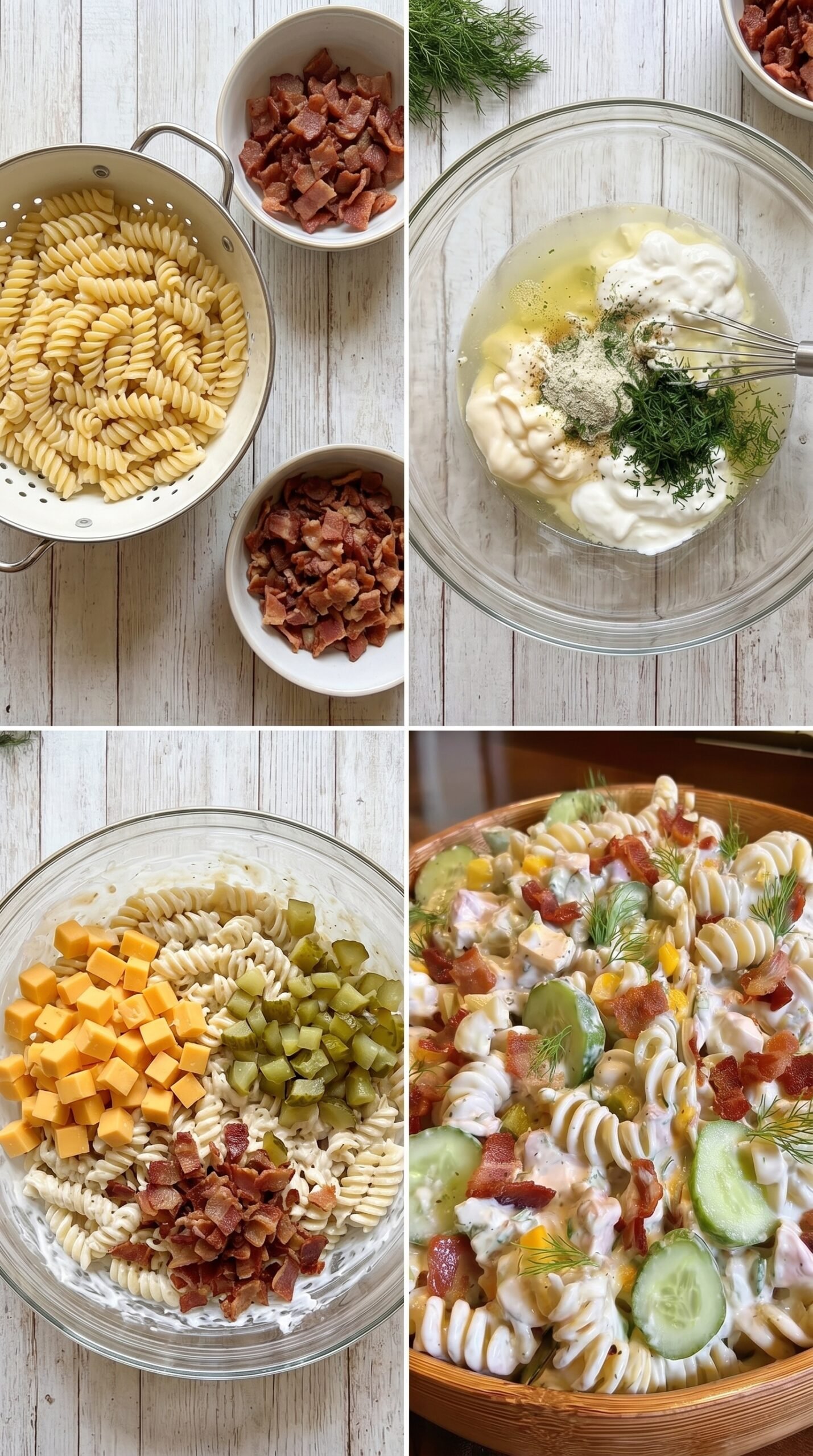
Step 1: Cook the bacon first, then set it aside so it has time to drain and cool. Crisp bacon is easier to crumble and gives better texture in the finished salad. While the bacon cools, cook the pasta until al dente, then drain and rinse it under cold water until it no longer feels warm.
Step 2: Make the dressing in a large bowl by mixing mayonnaise, sour cream, pickle juice, ranch seasoning, and dill. The dressing should look smooth before the pasta is added. If you see dry specks of seasoning clumped together, keep stirring so the flavor does not hit unevenly.
Step 3: Add the cooled pasta, crumbled bacon, chopped dill pickles, and cubed sharp cheddar. Fold rather than mash. The goal is to coat the pasta while keeping the cheese cubes intact and the bacon distributed throughout the bowl.
Step 4: For a more polished serving bowl, hold back a small amount of bacon, cheese, pickles, and dill. After the salad is mixed, scatter those reserved pieces over the top. This does not change the flavor, but it makes the salad look fresher and gives the first spoonful better texture.
Step 5: Refrigerate the salad for at least one hour before serving. This chilling time is when the dressing thickens around the pasta and the pickle-ranch flavor becomes more even. Stir once before serving so any dressing at the bottom is brought back through the salad.
7) Recipe Card: Dill Pickle Bacon Ranch Pasta Salad
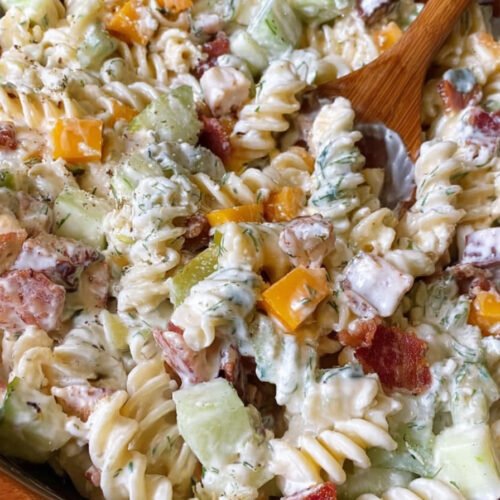
Dill Pickle Bacon Ranch Pasta Salad
Ingredients
- 16 oz Rotini or any other type of short pasta that you like, cooked just until al dente so it holds its shape after chilling
- 16 oz Bacon, cooked and crumbled, with a little reserved for topping if you want a crisp finish
- 1 Cup Mayonnaise, for the creamy base that clings to the pasta
- 1 Cup Sour Cream, to lighten the dressing and add tang
- 1/2 Cup Pickle Juice, measured from the pickle jar for sharp briny flavor
- 1 Packet Ranch Dressing Seasoning Mix, stirred into the dressing until no dry pockets remain
- 2 tbsp Fresh Dill, roughly chopped dried dill works just fine too, added for a fresh pickle-shop aroma
- 2 Cups Dill Pickles, roughly chopped, patted lightly if very wet so the salad does not turn watery
- 8 oz Sharp Cheddar Cheese, cubed I do not recommend any other type of cheese, the sharpness of the cheddar really goes well with this dish
Instructions
- Cook the bacon until crisp, drain it well, crumble it, and set it aside. Cook the rotini or other short pasta in salted boiling water until al dente, then drain and rinse under cold water until the pasta is completely cooled; this stops the cooking and keeps the dressing from turning greasy or loose.
- In a large mixing bowl, whisk together the mayonnaise, sour cream, pickle juice, ranch dressing seasoning mix, and chopped dill until the dressing looks smooth, creamy, and evenly seasoned.
- Add the cooked and cooled pasta, crumbled bacon, chopped dill pickles, and cubed sharp cheddar cheese to the bowl. Fold everything together thoroughly so the dressing coats the pasta grooves and the bacon, pickles, and cheese are evenly distributed.
- For a cleaner serving presentation, reserve a small amount of bacon, cheese, pickles, and dill before mixing, then scatter them over the top just before serving. This step is optional but gives the cold salad better color and texture at the table.
- Cover the bowl and refrigerate the pasta salad for at least 1 hour before serving. Serve cold, stirring once before plating so the dressing is creamy and evenly coating the salad.
8) Tips for Making Dill Pickle Bacon Ranch Pasta Salad
The most important tip is to treat the pasta temperature as part of the recipe. If the pasta is even slightly warm, the dressing can loosen and the cheese can soften at the edges. Cold pasta gives the creamy dressing something firm to coat. After rinsing, shake the colander well and let the pasta drain for a minute so water does not sneak into the bowl.
Cut the pickles and cheddar into pieces that are easy to catch with a fork. If the cubes are too large, the salad feels chunky in an awkward way. If they are too small, they disappear. A good bite should have pasta first, then a pop of pickle, a salty bit of bacon, and a firm piece of cheddar now and then.
Do not judge the final flavor immediately after mixing. A pickle bacon ranch pasta salad changes after chilling because the ranch seasoning hydrates, the pasta absorbs some dressing, and the pickle juice spreads more evenly. Taste after the rest period, then adjust only if needed. If it tastes too rich, a tiny splash of pickle juice can brighten it. If it tastes too sharp, a spoonful of sour cream can soften the edge.
9) Common Mistakes & Fixes
Problem: The salad turns watery. Cause: The pasta was not drained well, the pickles released too much liquid, or the dressing was mixed with warm pasta. Fix: Cool the pasta completely, drain it thoroughly, and use the measured pickle juice instead of pouring extra too early.
Problem: The pasta tastes bland. Cause: The pasta may have been over-rinsed without enough flavorful dressing, or the salad was served before the ranch seasoning had time to settle. Fix: Chill for at least one hour, stir well, and taste before making final adjustments.
Problem: The bacon gets lost. Cause: Soft bacon blends into the creamy dressing and loses its contrast. Fix: Cook the bacon until crisp, drain it well, and reserve a small amount for topping just before serving.
Problem: The salad feels too heavy. Cause: Too much mayonnaise flavor without enough acid can make the dressing taste dense. Fix: Keep the sour cream and pickle juice in balance, and avoid replacing all the sour cream with mayonnaise.
Problem: The cheese tastes dull. Cause: Mild cheese does not stand out against ranch, bacon, and pickles. Fix: Use sharp cheddar cubes so the cheese adds flavor as well as texture.
10) How to Tell Dill Pickle Bacon Ranch Pasta Salad Has the Right Texture
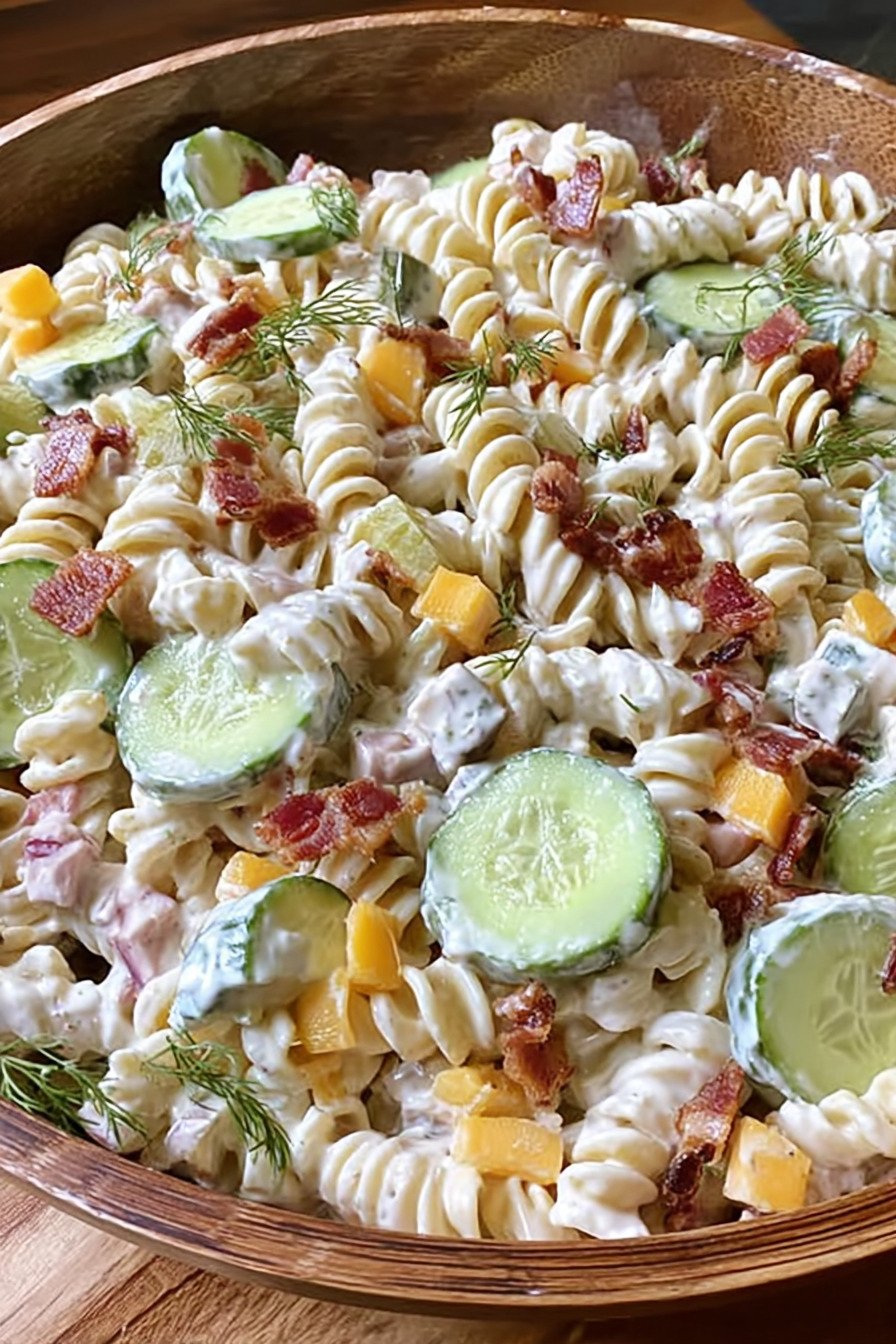
A well-made dill pickle bacon ranch pasta salad should look creamy but not soupy. The dressing should cling to the pasta twists instead of pooling heavily at the bottom of the bowl. When you stir it, the salad should move easily but still hold together on a spoon. The pasta should be tender with a slight bite, not swollen or mushy.
The texture should have contrast. You should notice cool pasta, crisp or slightly chewy bacon, crunchy pickles, and firm cheddar cubes. If every bite feels soft, the bacon may have been added too early or cooked too gently. If the salad feels dry after chilling, stir before adding anything; the dressing may simply need to be redistributed.
The aroma should be tangy and herby, with dill and ranch coming through before the smoky bacon. The flavor should be creamy, salty, briny, and sharp without tasting harsh. Failure signs include watery dressing, greasy shine, limp pasta, rubbery cheese edges, or pickle flavor so strong that the bacon and cheddar disappear.
11) Professional Secrets Behind Better Dill Pickle Bacon Ranch Pasta Salad
The first secret is controlled dilution. Pasta salad dressing needs enough liquid to coat, but not so much that it collapses after chilling. Pickle juice is powerful because it adds salt and acid at the same time. That is why it should be measured into the dressing instead of added casually at the end.
The second secret is seasoning distribution. Ranch seasoning mix can taste sharp or salty if it is not fully dissolved into the mayonnaise, sour cream, and pickle juice. Whisking the dressing before adding the pasta prevents dry seasoning pockets and gives the salad a more consistent flavor from top to bottom.
The third secret is finishing texture. A cold pasta salad often looks flatter after it sits because the dressing settles and the top loses definition. Reserving a little bacon, cheddar, pickles, and dill for the top makes the bowl look fresh, but it also gives the first serving the same crunch and color as the last.
12) Best Dishes or Pairings to Serve With Dill Pickle Bacon Ranch Pasta Salad
This salad is rich, tangy, smoky, and cold, so it pairs best with foods that are hot, grilled, roasted, or simply seasoned. Serve it with burgers, grilled chicken, barbecue ribs, pulled pork sandwiches, hot dogs, or crispy chicken tenders. The pickle juice in the dressing cuts through fatty meats, while the bacon and cheddar make the salad substantial enough for a cookout plate.
For a lighter meal, pair it with sliced tomatoes, grilled vegetables, corn on the cob, or a simple green salad. It also works well on a picnic table because it has bold flavor and can be served cold. Keep it chilled until serving, especially outdoors, and place the reserved topping on right before it goes to the table.
13) Making Dill Pickle Bacon Ranch Pasta Salad Ahead of Time
This dill pickle bacon ranch pasta salad is a strong make-ahead side because the flavor improves after chilling. Make it at least one hour ahead, or up to one day ahead if you want the dressing to settle more deeply into the pasta. For the best texture, reserve some bacon and fresh dill separately and add them just before serving.
If the salad thickens overnight, do not immediately pour in more pickle juice. Stir it from the bottom first because the dressing often settles. If it still needs loosening, use a small spoonful of sour cream for creaminess or a very small splash of pickle juice for brightness. Add gradually so the salad does not become thin.
14) Storing Leftover Dill Pickle Bacon Ranch Pasta Salad
Store leftover dill pickle bacon ranch pasta salad in a covered container in the refrigerator for up to 3 days. Stir before serving because cold dressing firms up and can settle around the pasta. This salad should be served cold, not reheated, because the mayonnaise and sour cream dressing is meant for chilled serving.
Freezing is not recommended. Creamy dressings made with mayonnaise and sour cream can separate after thawing, and the pasta can become soft and watery. If you want to refresh leftovers, add a few extra chopped pickles, a small spoonful of sour cream, or a little reserved bacon on top to bring back texture.
15) FAQ (Real Cooking Questions)
Can I make dill pickle bacon ranch pasta salad the night before? Yes. It actually benefits from chilling because the ranch and pickle flavors have time to settle. For the freshest texture, save a little bacon and dill for topping right before serving.
Why did my pasta salad turn watery? The most likely reasons are warm pasta, wet pickles, or too much added pickle juice. Cool and drain the pasta well, roughly chop the pickles without adding extra brine, and stir before adjusting the dressing.
Can I use a different pasta shape? Yes, as long as it is a short pasta shape that holds dressing well. Rotini, shells, elbows, and small penne can work. Long pasta is harder to mix evenly and does not give the same fork-friendly texture.
Can I make this pickle bacon pasta salad without bacon? You can leave bacon out for a meatless variation, but the salad will lose smoky saltiness and crunch. Add extra sharp cheddar and pickles if you want more texture, but keep the core dressing balance the same.
What makes this a good pasta salad with ranch packet? The ranch packet gives concentrated flavor, but it works best when whisked into mayonnaise, sour cream, pickle juice, and dill. That prevents dry seasoning pockets and creates a smoother dressing.
16) Save This Dill Pickle Bacon Ranch Pasta Salad Recipe
If this Dill Pickle Bacon Ranch Pasta Salad helped you solve bland, watery pasta salad, save it for cookouts, potlucks, and cold side-dish nights. The key reminder is: cool the pasta completely, balance the pickle juice, and chill before serving for creamy texture and bold flavor.
17) Conclusion
The difference between an average pasta salad and a memorable dill pickle bacon ranch pasta salad is not complicated; it is control. Control the pasta texture, control the dressing thickness, control the pickle juice, and control when the crisp toppings go on. Once those pieces are in place, the salad tastes intentional instead of thrown together.
This recipe turns the usual problems of cold pasta salad into simple checkpoints: al dente pasta, fully cooled noodles, smooth ranch-pickle dressing, sharp cheddar, crisp bacon, and enough chilling time. When you understand those details, you can make a creamy, tangy, smoky pasta salad that holds its texture and tastes balanced from the first spoonful to the last.
18) Nutrition
Serving Size 1 portion Calories 620 Sugar 3 g Sodium 1120 mg Fat 45 g Saturated Fat 15 g Carbohydrates 34 g Fiber 2 g Protein 20 g Cholesterol 70 mg
Leave a Comment