
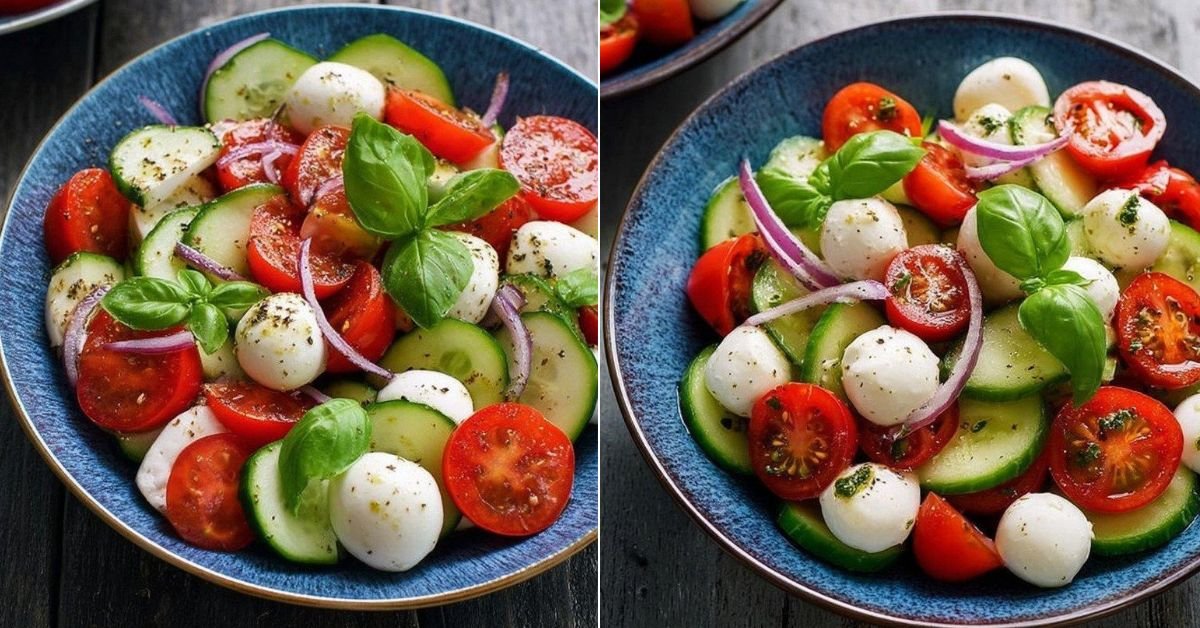
What I Learned Testing Fresh Cucumber Caprese Salad
A cucumber caprese salad can go from crisp and bright to watery and flat faster than people expect. I’m Evelyn, and my first batch had good ingredients, but the cucumber pieces were too large, the onion was too sharp, and the dressing slid to the bottom of the bowl. After testing smaller cuts, a short dressing rest, and a gentler toss, I discovered the real trick: balance the moisture before the salad sits. This fresh cucumber caprese salad became the calm, colorful summer cucumber salad I reach for when dinner needs something cool, simple, and genuinely refreshing.
Table of Contents
- 1) What I Learned Testing Fresh Cucumber Caprese Salad
- 2) Key Takeaways
- 3) Easy Fresh Cucumber Caprese Salad Recipe
- 4) Why Most Fresh Cucumber Caprese Salad Recipes Fail
- 5) Ingredients for Fresh Cucumber Caprese Salad
- 6) How to Make Fresh Cucumber Caprese Salad
- 7) Recipe Card: Fresh Cucumber Caprese Salad
- 8) Tips for Making Fresh Cucumber Caprese Salad
- 9) Common Mistakes & Fixes
- 10) How to Tell Fresh Cucumber Caprese Salad Has the Right Texture
- 11) Professional Secrets Behind Better Fresh Cucumber Caprese Salad
- 12) Best Dishes or Pairings to Serve With Fresh Cucumber Caprese Salad
- 13) Making Fresh Cucumber Caprese Salad Ahead of Time
- 14) Storing Leftover Fresh Cucumber Caprese Salad
- 15) FAQ (Real Cooking Questions)
- 16) Save This Fresh Cucumber Caprese Salad Recipe
- 17) Conclusion
- 18) Nutrition
2) Key Takeaways
- The best cucumber caprese salad depends on moisture control, not complicated ingredients.
- Small cucumber pieces and quartered cherry tomatoes help every bite include crunch, sweetness, creaminess, and balsamic tang.
- Letting the dressing rest briefly before tossing gives dried herbs time to soften and taste less dusty.
- The salad should rest for about 10 minutes after tossing, but it should not be dressed hours ahead unless you want a softer, juicier texture.
3) Easy Fresh Cucumber Caprese Salad Recipe
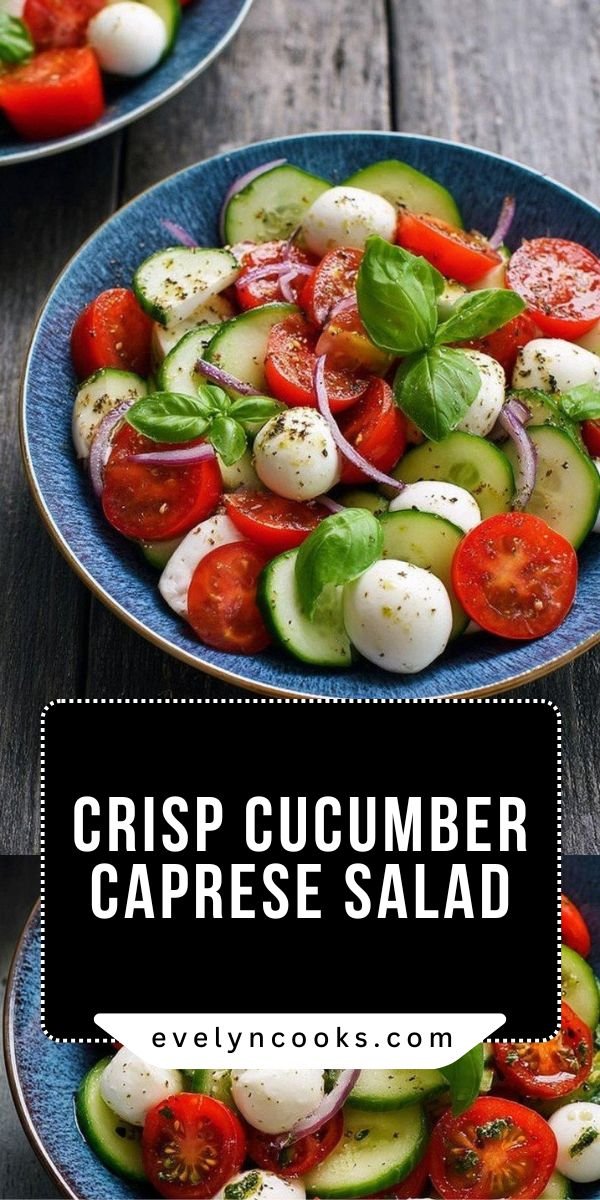
This cucumber caprese salad recipe works because it treats a no-cook salad like a balance exercise. Cucumber brings crisp water-rich freshness, cherry tomatoes bring sweetness and acidity, fresh mozzarella gives a soft creamy contrast, red onion adds bite, and balsamic dressing pulls everything together. The method is simple, but the details matter. If the cucumber is cut too large, the salad tastes scattered. If the onion is too chunky, it dominates. If the dressing is poured on and served immediately, the herbs can taste dry. A short rest lets the flavors settle without sacrificing the clean crunch that makes this easy summer side salad worth saving.
4) Why Most Fresh Cucumber Caprese Salad Recipes Fail
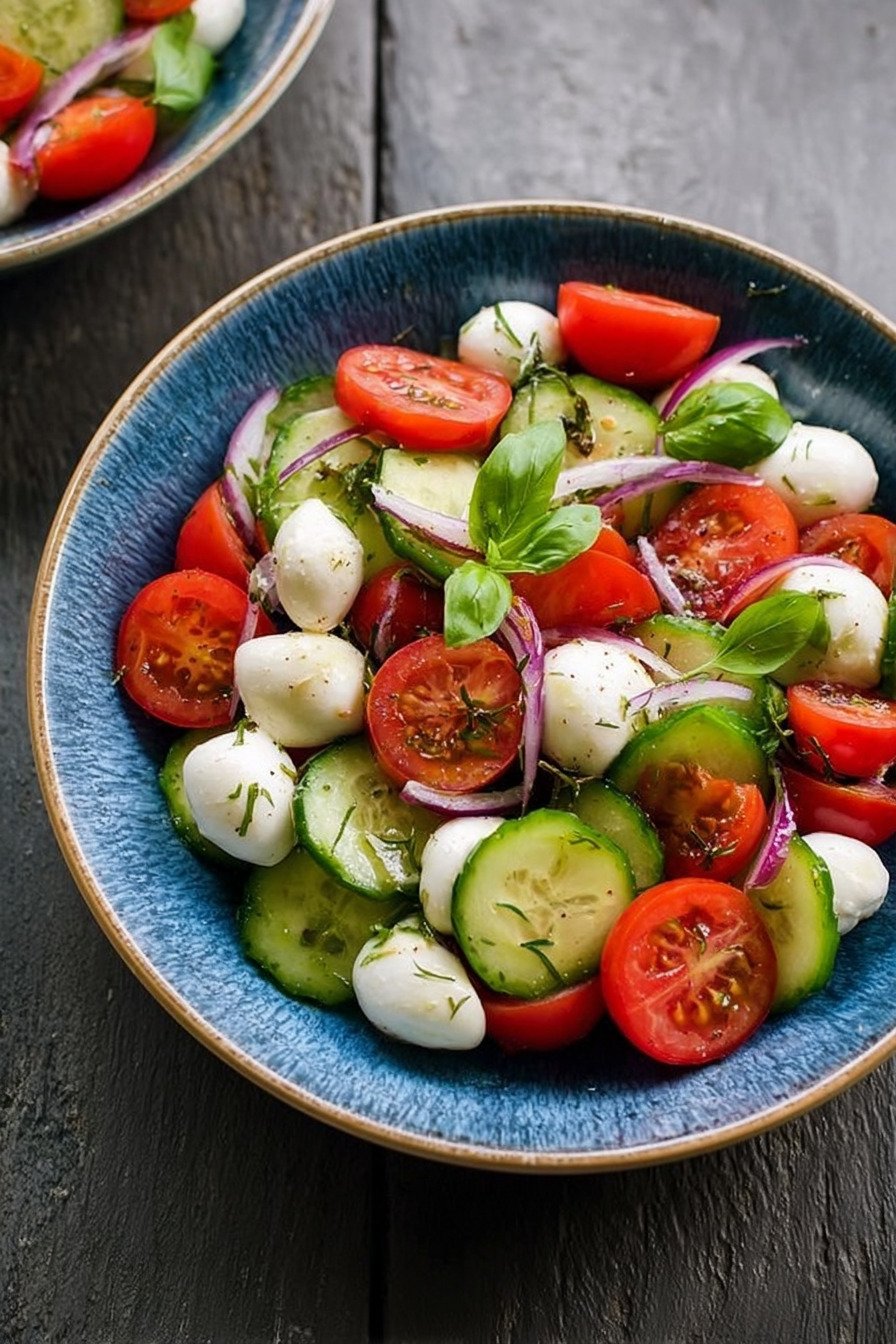
Most fresh cucumber caprese salad recipes fail because cucumbers release moisture after they are cut and salted. When the pieces are too small, they leak quickly; when they are too large, the dressing does not cling well. The fix is bite-sized pieces that are small enough for balanced bites but not so tiny that they collapse.
Another common problem is harsh onion flavor. Red onion adds brightness, but thick pieces can make a delicate tomato cucumber caprese salad taste sharp. Finely chopping the onion spreads that bite through the bowl instead of creating one overwhelming mouthful.
Dried herbs can also taste flat if they are tossed in at the last second. Whisking them into olive oil and balsamic vinegar first gives them time to hydrate. That small pause makes the dressing taste more rounded and helps the caprese salad recipe feel intentional instead of rushed.
The final failure is overdressing. A cucumber caprese salad should look lightly glossy, not soaked. If liquid pools at the bottom right away, the salad will soften faster and the mozzarella can taste watery instead of creamy.
5) Ingredients for Fresh Cucumber Caprese Salad
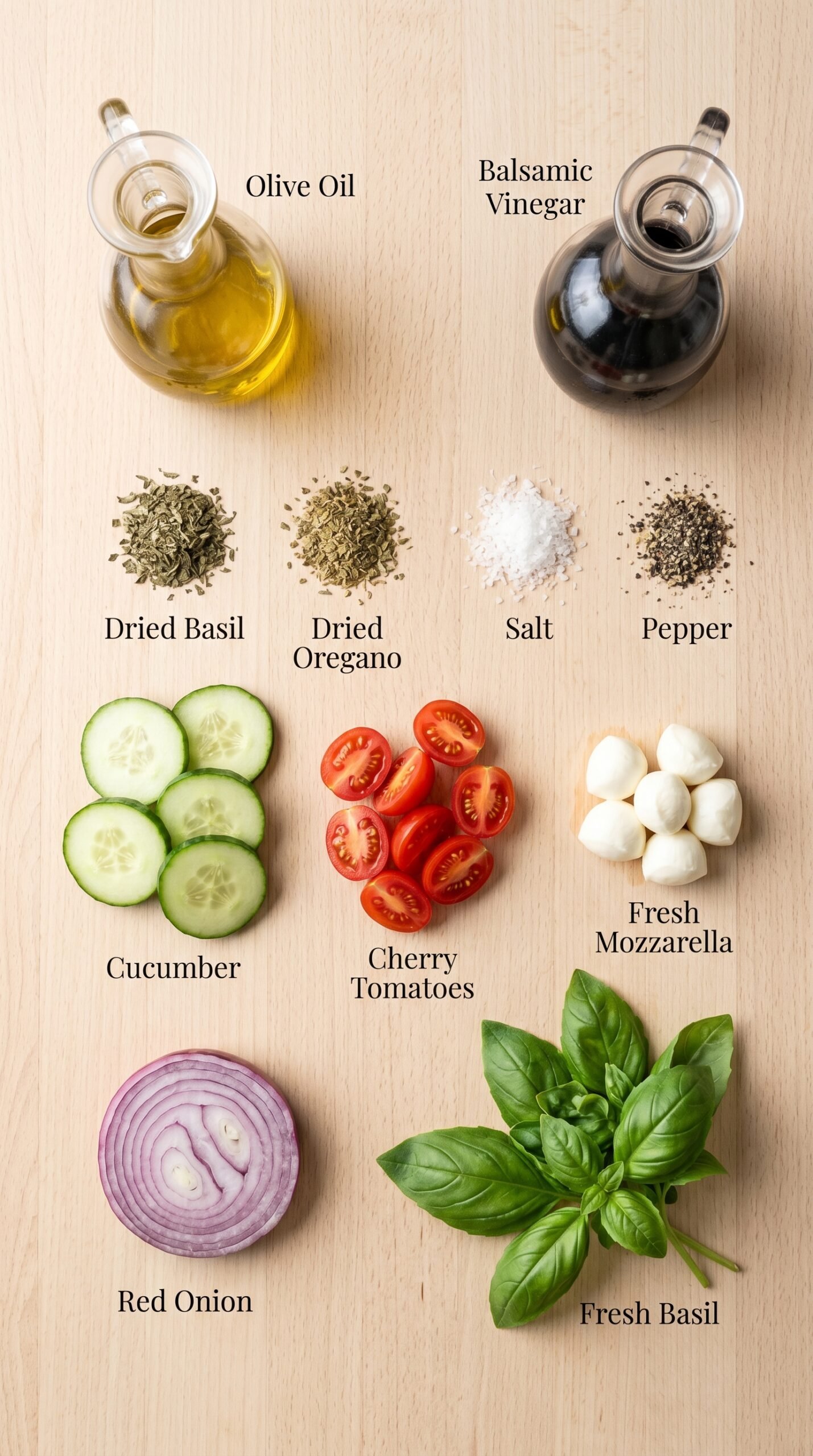
Olive oil: Extra virgin olive oil gives the dressing body and helps carry the basil, oregano, salt, and pepper across the cucumber and tomatoes. Use it when you want a smoother finish; replacing it with a neutral oil makes the salad taste less rounded.
Balsamic vinegar: Balsamic vinegar adds sweet acidity that matches the mozzarella and tomatoes. Use enough to brighten the salad, but not so much that the cucumber tastes pickled. A sharper vinegar will make the salad taste more aggressive.
Dried basil: Dried basil adds a familiar caprese-style aroma when fresh basil is not enough or not available. It works best when it rests in the dressing for a few minutes. If you use only fresh basil, add it near the end for a greener flavor.
Dried oregano: Oregano adds depth and a savory edge. It should stay subtle because too much can make a fresh cucumber caprese salad taste heavy. Use it in the dressing so it softens before it touches the vegetables.
Salt and pepper: Salt wakes up the tomato, cucumber, and mozzarella, while pepper adds a gentle bite. Add the first amount to the dressing, then adjust after the salad rests because the tomatoes release juice and change the seasoning balance.
Cucumber: Cucumber is the crisp base of the salad. Peel it if the skin is thick, waxy, or bitter. If the cucumber is very watery, pat the pieces dry before tossing so the dressing stays bright instead of diluted.
Cherry tomatoes: Cherry tomatoes bring sweetness, acidity, and color. Quartering them creates easier bites and releases just enough juice to blend with the balsamic dressing. Halved tomatoes work, but the salad may taste less integrated.
Fresh mozzarella: Fresh mozzarella gives the salad its creamy contrast. Tear or slice it small so it appears in more bites. Mini mozzarella balls are convenient, but larger ones should be halved or quartered for better distribution.
Red onion: Red onion adds bite and keeps the salad from tasting too soft. Finely chopping it is important. Large onion pieces can overpower the balsamic, basil, tomato, and mozzarella.
Fresh basil: Fresh basil is optional, but it gives the salad a clean, fragrant finish. Add it close to serving so it stays green and aromatic. If it sits too long in acidic dressing, it darkens and loses its fresh lift.
- Cucumber vs. lettuce: Cucumber gives stronger crunch and holds up better than delicate greens in a dressed summer cucumber salad.
- Quartered tomatoes vs. halved tomatoes: Quartered tomatoes create more even bites and help the dressing mingle with tomato juices.
- Fresh mozzarella vs. shredded cheese: Fresh mozzarella keeps the salad creamy and gentle, while shredded cheese changes the texture and makes it feel less like a caprese salad recipe.
- Rested dressing vs. instant dressing: Resting the dressing softens dried herbs and gives the oil, vinegar, salt, and pepper a smoother flavor.
6) How to Make Fresh Cucumber Caprese Salad
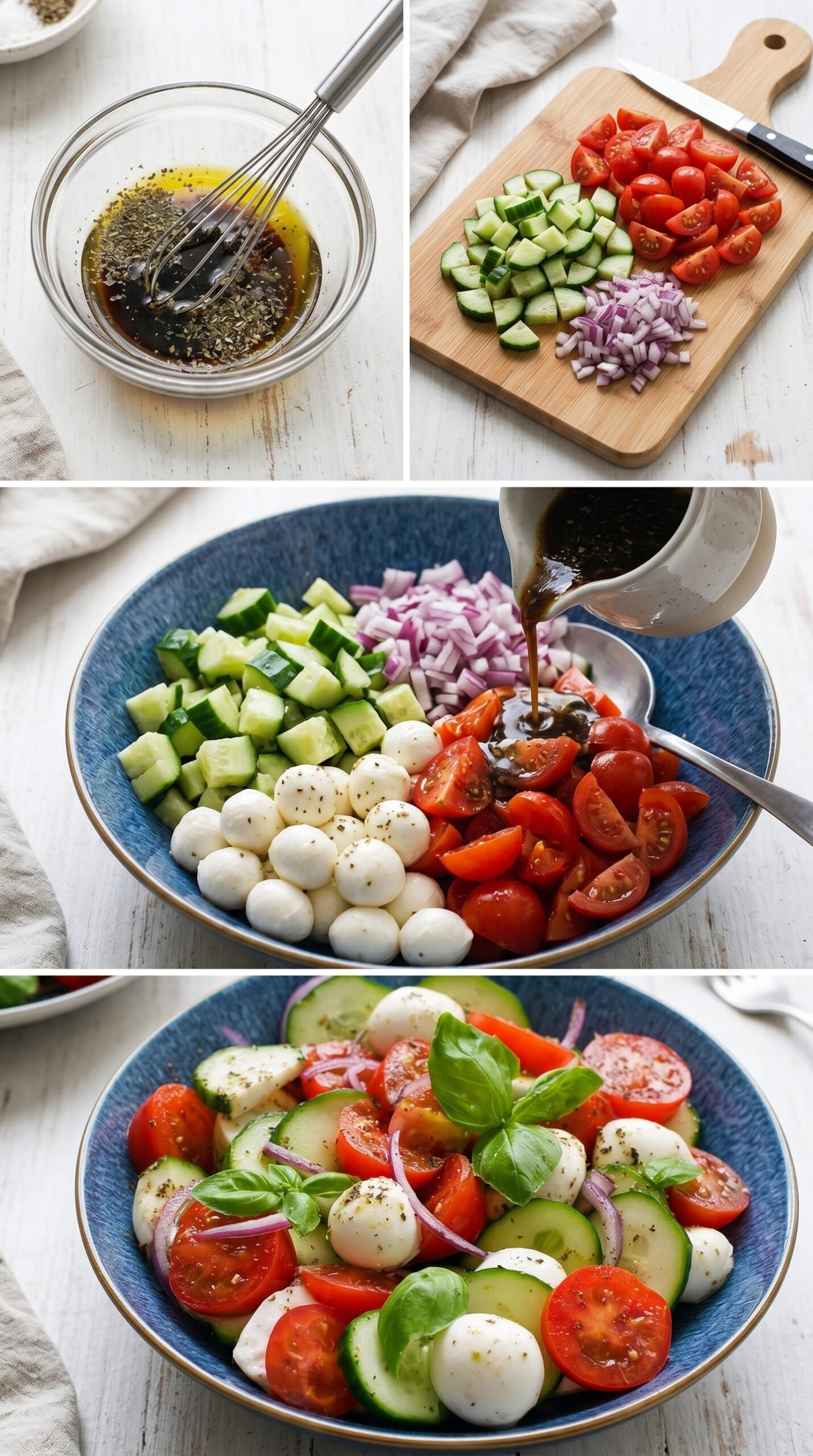
Step 1: Whisk the olive oil, balsamic vinegar, dried basil, dried oregano, salt, and pepper in a small bowl until the dressing looks glossy. Let it sit while you prep the salad so the herbs soften and the vinegar tastes less sharp.
Step 2: Peel the cucumber if the skin is thick, then slice and dice it into bite-sized pieces. The goal is crisp pieces that fit easily on a fork with tomato and mozzarella, not large chunks that separate from the rest of the salad.
Step 3: Quarter the cherry tomatoes and finely chop the red onion. Add them to the bowl with the cucumber. Look for juicy tomatoes, but avoid crushing them as you cut because too much loose juice can water down the dressing.
Step 4: Tear or slice the mozzarella into small pieces and add it to the bowl. If using mini mozzarella balls, cut larger ones in half so the creamy texture is spread throughout the cucumber caprese salad.
Step 5: Pour the dressing over the salad and toss gently until the ingredients are lightly coated. Let it rest for about 10 minutes so the flavors come together, then taste and adjust the salt, pepper, or balsamic before serving.
7) Recipe Card: Fresh Cucumber Caprese Salad
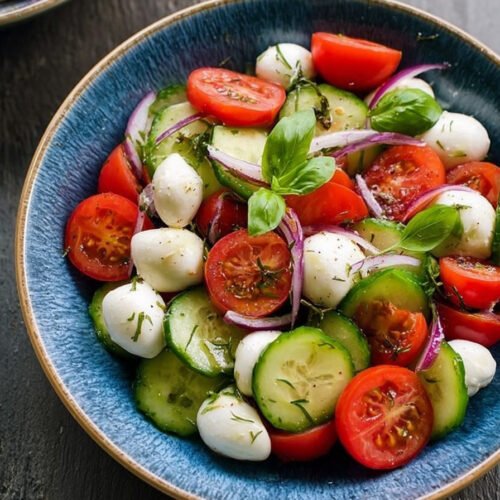
Fresh Cucumber Caprese Salad
Ingredients
For the dressing
- 3 tablespoons extra virgin olive oil, for a rich dressing base that coats the vegetables lightly
- 1 tablespoon balsamic vinegar, for a sweet-tangy caprese-style finish
- 1 teaspoon dried basil, or use fresh basil if available for a brighter aroma
- 1/2 teaspoon dried oregano, for gentle herb depth without overpowering the salad
- 1/2 teaspoon salt, plus more to taste after tossing
- 1/4 teaspoon black pepper, freshly cracked if possible
For the salad
- 1 large cucumber, peeled if the skin is thick and diced into bite-sized pieces
- 2 cups cherry tomatoes, quartered for easy bites and better dressing coverage
- 8 ounces fresh mozzarella, torn or sliced into small pieces; mini mozzarella balls also work well
- 1/4 cup red onion, finely chopped so the bite stays balanced
- 1/4 cup fresh basil, optional, torn just before serving for extra freshness
Instructions
- Whisk the olive oil, balsamic vinegar, dried basil, dried oregano, salt, and black pepper in a small bowl until the dressing looks glossy and lightly combined. Let it sit while you prepare the vegetables so the dried herbs can soften and release more flavor.
- Peel the cucumber only if the skin is thick or waxy, then slice and dice it into bite-sized pieces. Keep the pieces fairly small so the cucumber stays crisp but still mixes evenly with the tomatoes, mozzarella, and dressing.
- Quarter the cherry tomatoes and finely chop the red onion. Add both to the bowl with the cucumber, keeping the onion pieces small so they add brightness without overwhelming the fresh tomato and cucumber flavor.
- Tear or slice the fresh mozzarella into small pieces and add it to the salad bowl. If using mini mozzarella balls, halve them if they are large so the creamy texture is spread through the salad instead of sitting in big chunks.
- Pour the dressing over the salad and toss gently until everything is lightly coated. Let the salad rest for about 10 minutes before serving so the balsamic, herbs, tomato juices, and mozzarella settle into a balanced, fresh flavor without making the cucumber soggy.
8) Tips for Making Fresh Cucumber Caprese Salad
Cut the cucumber and tomatoes with the final bite in mind. A good cucumber caprese salad should let you get cucumber, tomato, mozzarella, onion, and dressing on the fork together. If one ingredient is much larger than the others, the salad feels uneven.
Use a gentle tossing motion. Fresh mozzarella can smear or break down if stirred aggressively, and tomatoes can release too much juice if crushed. Lift from the bottom of the bowl and turn the ingredients until everything is lightly coated.
Let the salad rest, but do not forget it. Ten minutes is enough time for the balsamic dressing to season the vegetables. After a long rest, cucumber continues releasing water, which changes the texture from crisp to soft.
Taste after resting, not only before. Salt draws out moisture and tomato juice blends into the dressing, so the final flavor may need a tiny pinch of salt, a few drops of balsamic vinegar, or a small drizzle of olive oil to rebalance it.
9) Common Mistakes & Fixes
Problem: The salad tastes watery. Cause: The cucumber was very moist, the tomatoes released too much juice, or the salad sat dressed for too long. Fix: Pat watery cucumber pieces dry, quarter tomatoes carefully, and dress the salad close to serving.
Problem: The onion flavor is too strong. Cause: The red onion pieces are too large or too much onion was used. Fix: Chop the onion finely and use a lighter hand if your onion is especially sharp.
Problem: The dressing tastes harsh. Cause: The balsamic vinegar was not balanced by enough olive oil, or the dried herbs did not have time to soften. Fix: Whisk the dressing first, let it rest while prepping, and adjust with a small drizzle of olive oil if needed.
Problem: The mozzarella disappears into the salad. Cause: The pieces were too tiny or the salad was mixed too firmly. Fix: Tear mozzarella into small but visible pieces and toss gently.
10) How to Tell Fresh Cucumber Caprese Salad Has the Right Texture
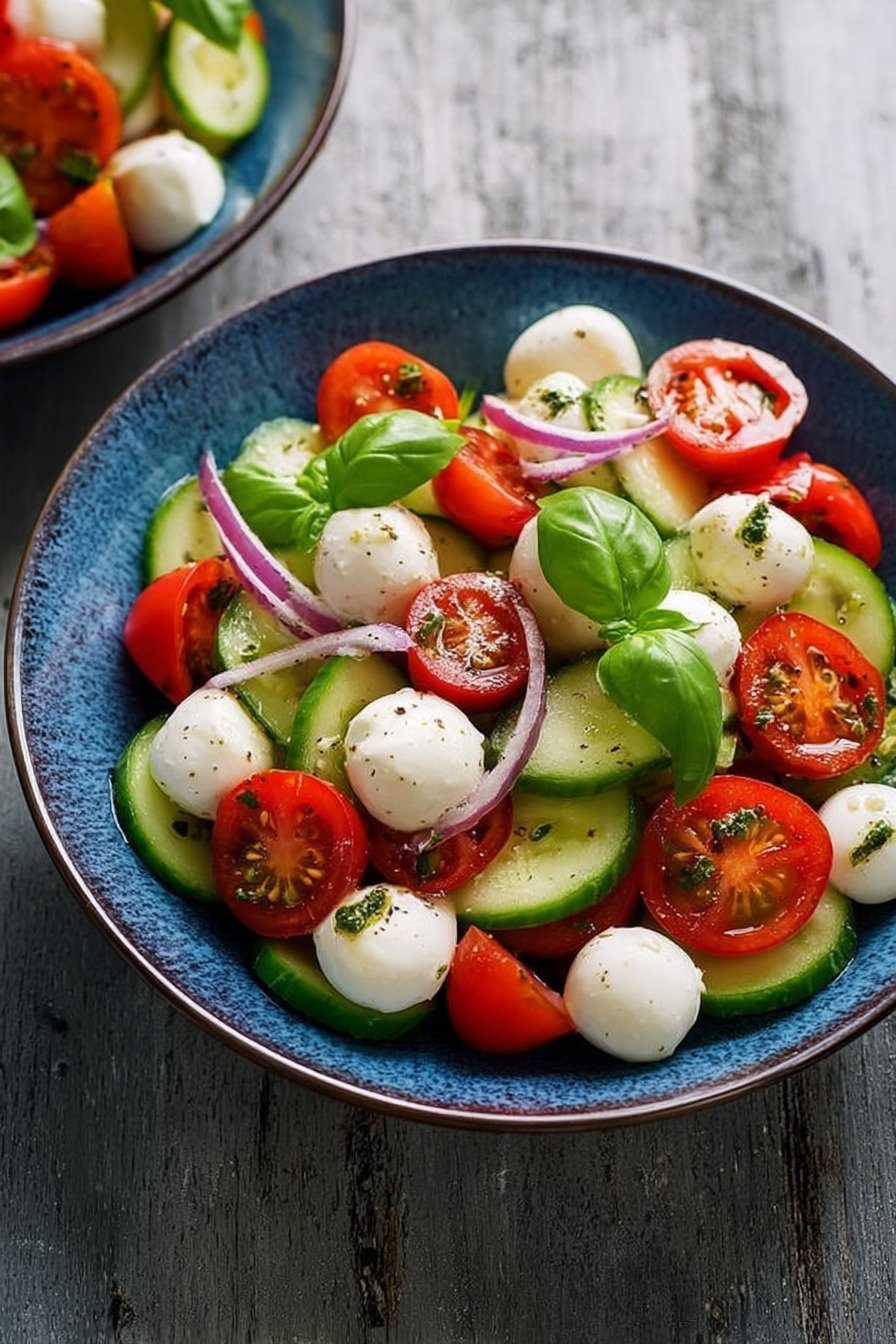
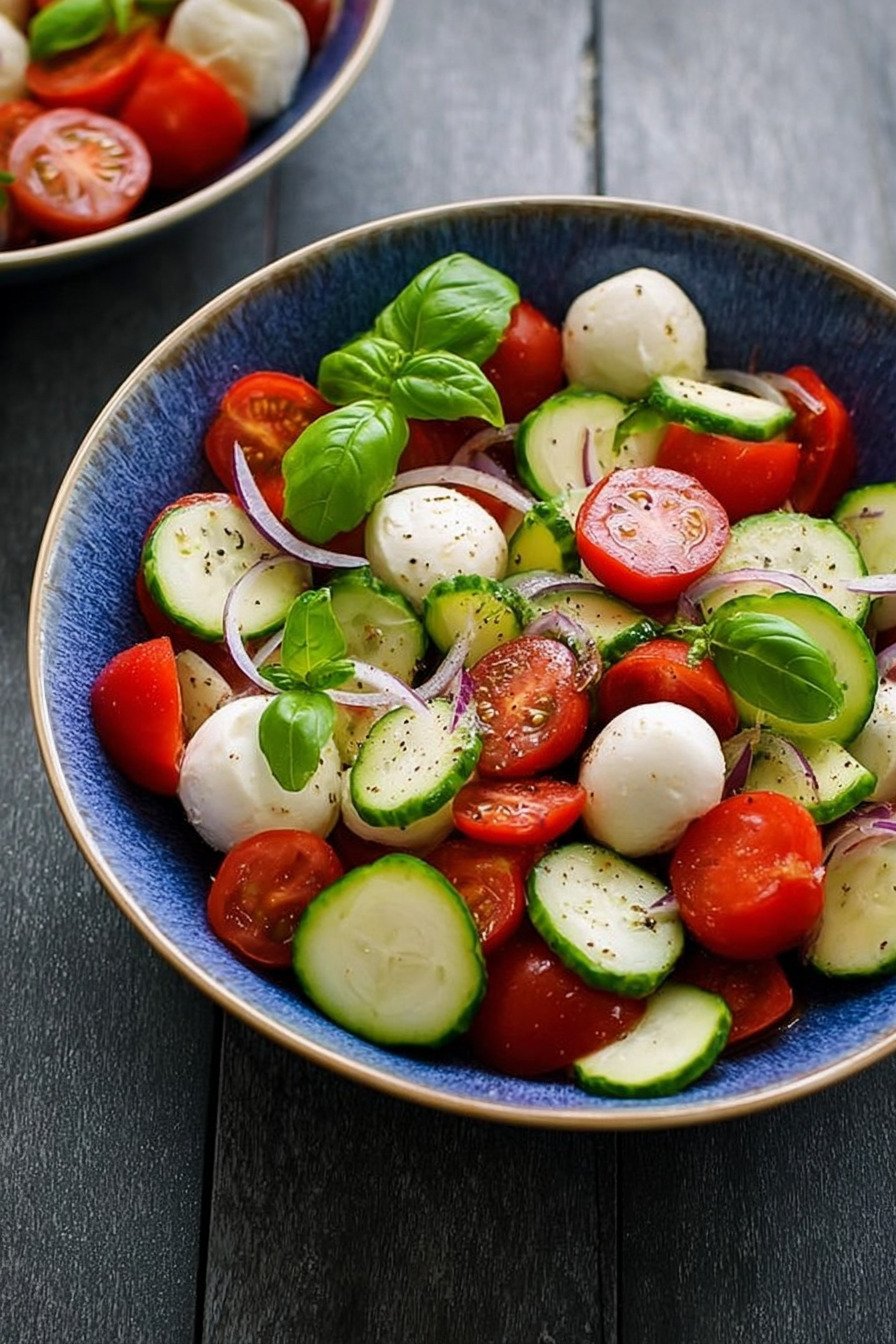
A well-made fresh cucumber caprese salad should look colorful, lightly glossy, and fresh rather than wet. The cucumber should still crunch when you bite it, the tomatoes should be juicy without collapsing, and the mozzarella should feel creamy instead of watery. The dressing should cling lightly to the ingredients with no heavy pool of liquid at the bottom of the bowl. The aroma should be sweet-tangy from the balsamic, gently herbal from basil and oregano, and fresh from cucumber and tomato. If the salad stretches, smears, looks soupy, or tastes flat, it has either been overmixed, overdressed, or left to sit too long.
11) Professional Secrets Behind Better Fresh Cucumber Caprese Salad
The professional secret is controlling water while building flavor. No-cook salads often fail because cooks think freshness alone is enough. In reality, the cuts, seasoning order, and resting time decide whether the final bowl tastes crisp or diluted. Letting the dressing sit before tossing gives dried herbs time to bloom in oil and vinegar. Cutting tomatoes smaller helps their natural juice join the dressing. Keeping mozzarella pieces visible gives creamy contrast. Adding fresh basil at the end protects its color and aroma. These small choices make a simple tomato cucumber caprese salad taste clean, balanced, and intentional.
12) Best Dishes or Pairings to Serve With Fresh Cucumber Caprese Salad
Fresh cucumber caprese salad works especially well beside grilled chicken, turkey burgers, salmon, steak skewers, flatbread, pasta, or simple sandwiches. It also fits picnic meals because it brings cool crunch next to richer foods. For a lighter plate, serve it with hummus, pita, roasted chickpeas, or a grain bowl. For a more classic summer dinner, pair it with grilled corn, garlic bread, or a simple pasta dish. The salad’s acidity cuts through heavier mains, while the mozzarella adds enough richness to keep the side dish satisfying.
13) Making Fresh Cucumber Caprese Salad Ahead of Time
The best make-ahead strategy is to prep the parts separately. Dice the cucumber, quarter the tomatoes, chop the onion, and store them in separate airtight containers if you want the cleanest texture. Whisk the dressing ahead and refrigerate it, then let it sit at room temperature briefly before tossing because olive oil can thicken when cold. Add mozzarella and basil close to serving. For the freshest result, combine the salad about 10 minutes before eating. This protects the crunch while still giving the dressing enough time to flavor the vegetables.
14) Storing Leftover Fresh Cucumber Caprese Salad
Store leftover cucumber caprese salad in an airtight container in the refrigerator for up to 24 hours. The flavor will still be pleasant, but the texture will soften as cucumber and tomatoes release more liquid. Stir gently before serving and taste again because cold temperatures can dull salt, vinegar, and herb flavor. Freezing is not recommended because cucumber and tomato become watery after thawing. Leftovers are best spooned over toast, tucked into wraps, added to a grain bowl, or served beside grilled protein where the extra juices can act like a light dressing.
15) FAQ (Real Cooking Questions)
Can I make cucumber caprese salad recipe ahead for a party? Yes, but prep the ingredients separately and toss them shortly before serving. Dressing the salad too early makes the cucumber release water and softens the texture.
Should I peel the cucumber? Peel it if the skin is thick, waxy, or bitter. If the skin is thin and tender, leaving it on adds color and a firmer crunch.
Can I use regular tomatoes instead of cherry tomatoes? Yes, but remove excess seeds and juice if the tomatoes are very watery. Cherry tomatoes are easier because they stay sweet, firm, and bite-sized.
Can I use fresh basil instead of dried basil? Yes. Dried basil works well in the dressing because it softens as it sits, while fresh basil is best added near the end for a brighter aroma.
Why did my summer cucumber salad taste bland? It probably needed more salt, acid, or resting time. Let the salad sit for about 10 minutes, then taste and adjust with a small pinch of salt or a few drops of balsamic vinegar.
16) Save This Fresh Cucumber Caprese Salad Recipe
If this Fresh Cucumber Caprese Salad helped you solve the watery salad problem, save it for summer dinners, cookouts, and quick side dishes. The key reminder is: cut evenly, rest the dressing first, and toss shortly before serving for crisp, balanced flavor.
17) Conclusion
Fresh Cucumber Caprese Salad is simple, but it rewards careful technique. Once you understand how cucumber moisture, tomato juice, mozzarella texture, onion bite, and balsamic dressing work together, the salad becomes much easier to control. The transformation is small but noticeable: no watery bowl, no harsh onion, no bland dressing, and no random bites where one ingredient takes over. With even cuts, a rested dressing, gentle tossing, and a short final rest, this easy summer side salad becomes crisp, creamy, tangy, and dependable.
18) Nutrition
Serving Size 1 portion Calories 245 Sugar 5 g Sodium 420 mg Fat 19 g Saturated Fat 7 g Carbohydrates 9 g Fiber 2 g Protein 10 g Cholesterol 30 mg




Leave a Comment