
1) My Tested Method for Baked Ranch Chicken
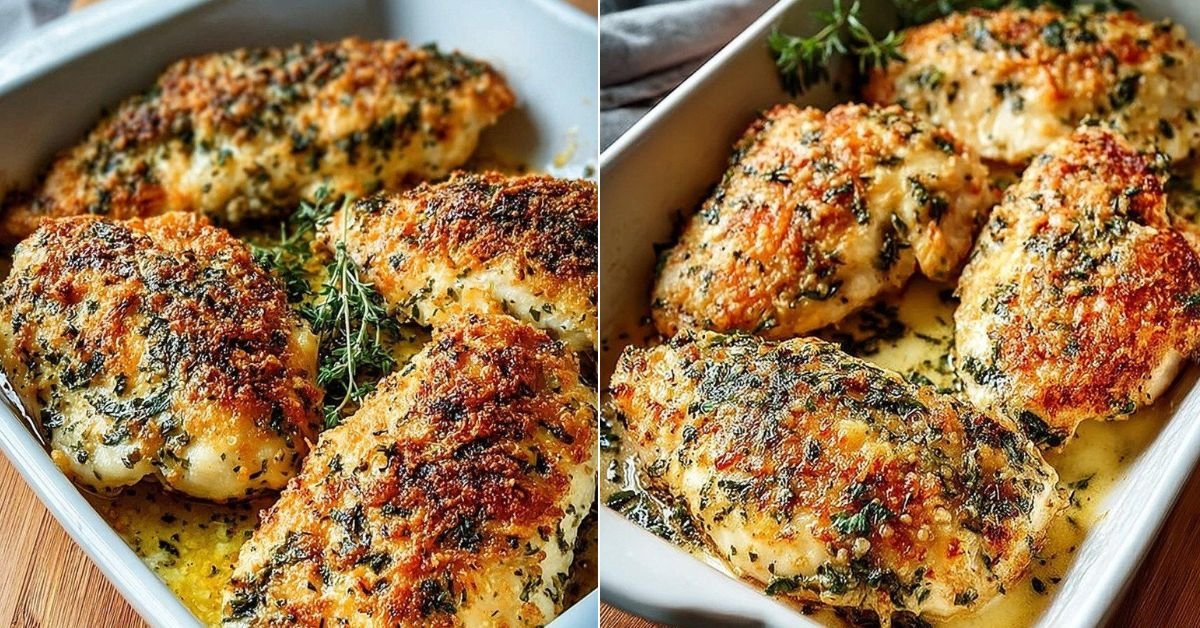
Dry chicken can ruin dinner fast, especially when the seasoning tastes good but the meat turns tough. I’m Evelyn, and I tested this Baked Ranch Chicken after one too many pale, overbaked chicken breasts made me rethink the timing. The discovery was simple: coat the chicken evenly, bake only until 165°F, and add the cheddar near the end so it melts without drying out. This ranch chicken baked method gives you a reliable dinner to make with chicken breast when you want calm, comfort, and a tray of quick oven chicken recipes that actually stay juicy.
Table of Contents
- 1) My Tested Method for Baked Ranch Chicken
- 2) Key Takeaways
- 3) Easy Baked Ranch Chicken Recipe
- 4) Why Most Baked Ranch Chicken Recipes Fail
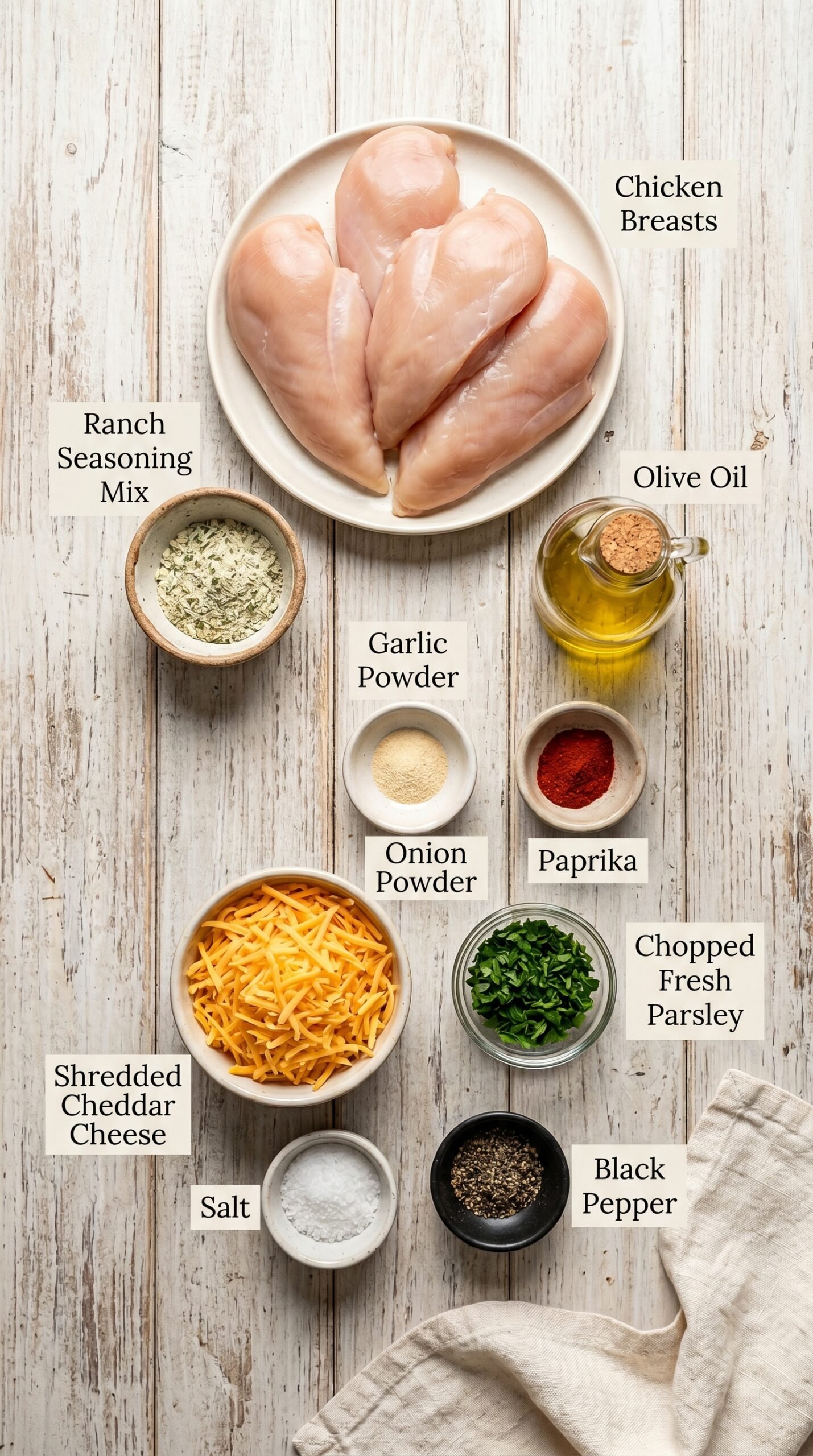
- 5) Ingredients for Baked Ranch Chicken
- 6) How to Make Baked Ranch Chicken
- 7) Recipe Card: Baked Ranch Chicken
- 8) Tips for Making Baked Ranch Chicken
- 9) Common Mistakes & Fixes
- 10) How to Tell Baked Ranch Chicken Is Done
- 11) Professional Secrets Behind Better Baked Ranch Chicken
- 12) Best Dishes or Pairings to Serve With Baked Ranch Chicken
- 13) Making Baked Ranch Chicken Ahead of Time
- 14) Storing Leftover Baked Ranch Chicken
- 15) FAQ (Real Cooking Questions)
- 16) Save This Baked Ranch Chicken Recipe
- 17) Conclusion
- 18) Nutrition
2) Key Takeaways
- The biggest texture saver is temperature control: Chicken breast should reach 165°F in the thickest part, then rest before slicing so the juices do not run out onto the cutting board.
- Cheddar belongs near the end: Adding it too early can make the cheese oily and overcooked before the chicken is properly done.
- Dry chicken needs a better coating: Olive oil or melted butter helps the ranch seasoning cling evenly instead of sitting in salty patches.
- This is one of the most practical baked chicken breast ideas: The method is simple, but the details matter: dry surface, even seasoning, spaced baking, final cheese melt, and a short rest.
3) Easy Baked Ranch Chicken Recipe
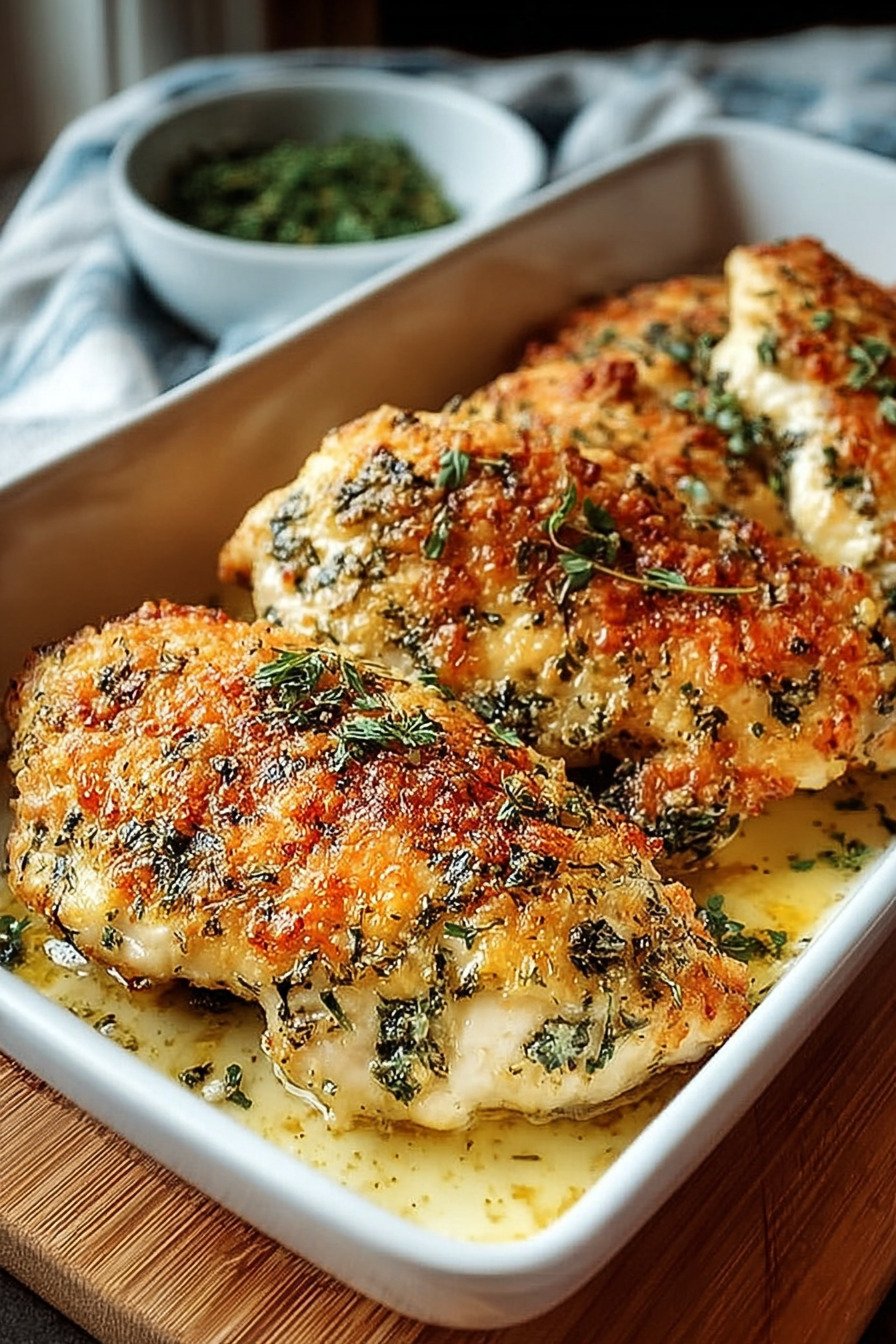
Baked Ranch Chicken works because it uses a high-impact seasoning blend with a simple oven method. Ranch seasoning brings herbs, tang, salt, and savory depth, while olive oil or melted butter helps carry that flavor across the chicken. The garlic powder and onion powder reinforce the ranch flavor instead of competing with it, and the optional paprika adds a warmer color that makes the finished chicken look more appetizing.
The texture goal is juicy chicken with a lightly seasoned surface and a melted cheddar finish. This is not a heavily sauced casserole and it is not a breaded chicken bake. The success comes from keeping the coating thin, baking the chicken just until done, and letting it rest before slicing. That rest is small but important because chicken breast firms as it cooks, then relaxes slightly as it sits.
For easy dinner recipes in oven, this method is especially useful because it does not need a long marinade. The seasoning mixture goes directly onto the chicken, the oven does the work, and the cheese is added only at the finish. That final timing gives you ranch flavor, melted cheddar, and a clean slice instead of dry meat with burnt cheese.
4) Why Most Baked Ranch Chicken Recipes Fail
They start with wet chicken: Moisture on the surface prevents the oil and ranch seasoning from coating evenly. Instead of creating a flavorful layer, the seasoning can slide into the baking dish. Patting the chicken dry first gives the seasoning something to grip.
They bake chicken pieces of different thicknesses: Thin edges finish before thick centers, which means one part dries out while another part is still catching up. If using chicken breasts, the thick side can be gently evened out before baking so each piece cooks more predictably.
They add cheese too soon: Cheddar needs only a few minutes to melt. When it bakes for the full cooking time, it can separate, brown unevenly, or become greasy. Adding it about 5 minutes before the chicken is done keeps the topping smooth and savory.
They rely only on the timer: A 25-minute bake can be enough for thinner pieces, while thicker pieces may need closer to 30 minutes. The most reliable sign is an internal temperature of 165°F in the thickest part.
They skip the resting time: Slicing immediately makes the juices spill out. Letting the chicken sit for a few minutes helps the meat stay moist, especially when preparing quick and easy chicken recipes healthy enough for regular weeknight cooking.
5) Ingredients for Baked Ranch Chicken
Boneless, skinless chicken breasts or thighs: Chicken breasts give a leaner result, while thighs stay slightly richer and more forgiving. Use whichever fits your dinner plan, but keep the pieces similar in size so they bake evenly.
Olive oil or melted butter: Olive oil creates a lighter coating, while melted butter gives a richer flavor. Both help the ranch seasoning stick to the chicken. Without this fat, the seasoning can taste dusty or patchy.
Ranch seasoning mix: This is the main flavor builder in ranch chicken baked recipes. It brings salt, herbs, tang, and savory depth. Because ranch seasoning can vary in saltiness, taste your seasoning blend mentally before adding extra salt heavily.
Garlic powder: Garlic powder adds savory depth without extra moisture. It is useful here because fresh garlic can burn on the surface during baking.
Onion powder: Onion powder rounds out the ranch flavor and gives the coating a fuller taste. It is especially helpful when making a dinner to make with chicken breast because lean chicken needs layered seasoning.
Paprika: Paprika is optional, but it gives the chicken a warmer color and mild earthy flavor. It is not meant to make the chicken spicy; it simply helps the surface look more finished.
Salt and black pepper: Use these carefully because ranch seasoning already contains salt. Black pepper adds a small bite that balances the creamy cheddar finish.
Shredded cheddar cheese: Cheddar adds a melted, savory topping. Add it near the end so it melts cleanly without overcooking.
Fresh parsley or chives: Fresh herbs brighten the finished chicken. Add them after baking so they stay green, fresh, and aromatic.
- Chicken breasts vs thighs: Breasts are lean and cook quickly, while thighs are juicier and more forgiving if baked a little longer.
- Olive oil vs melted butter: Olive oil keeps the dish lighter, while butter gives a richer comfort-food finish.
- Cheddar early vs cheddar late: Early cheese can turn oily; late cheese melts smoothly and protects the final texture.
- Thin coating vs heavy coating: A thin, even ranch coating seasons the chicken better than clumps of seasoning that can taste salty in one bite and bland in the next.
6) How to Make Baked Ranch Chicken
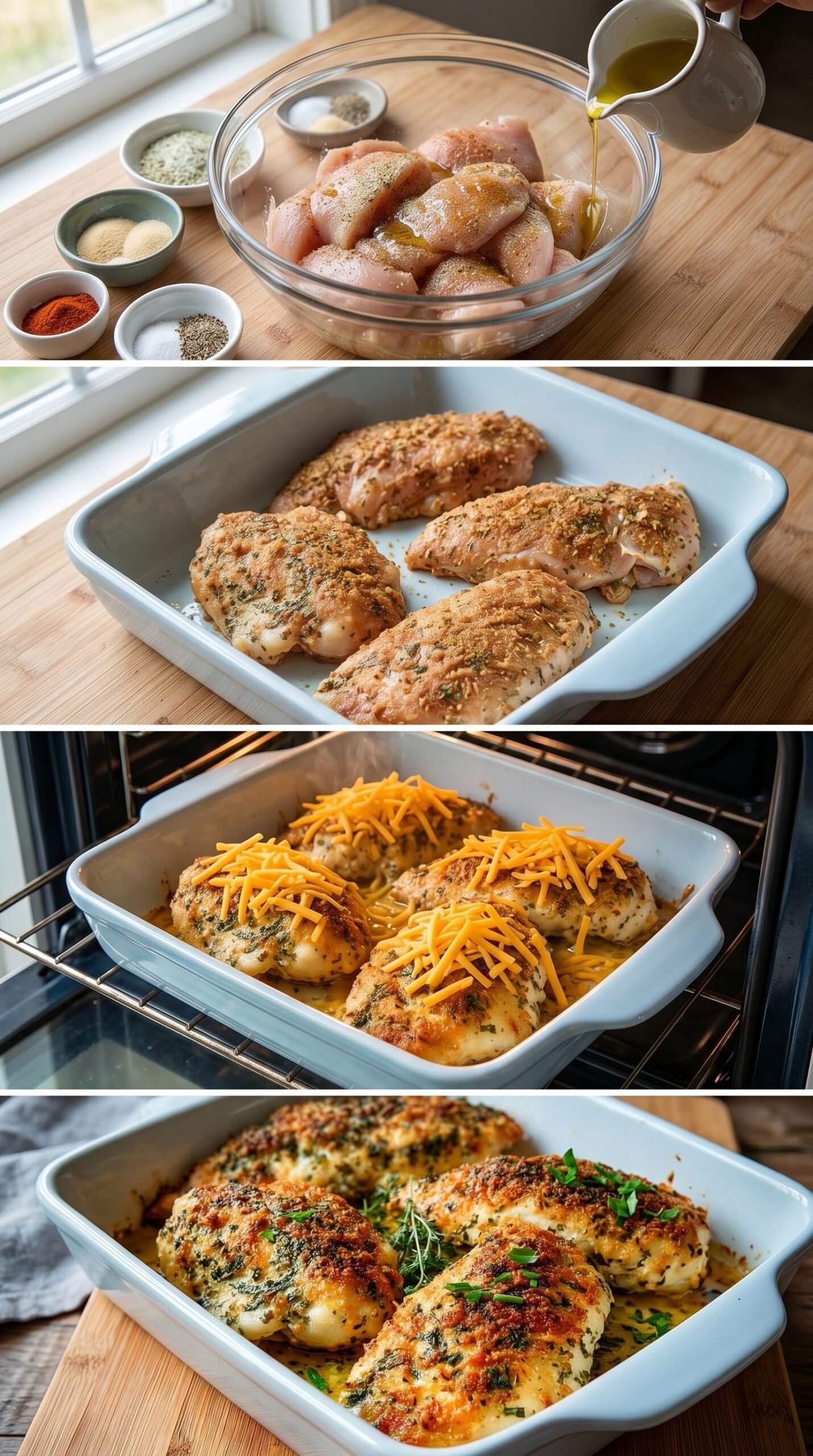
Step 1: Preheat the oven to 375°F. Starting with a fully heated oven helps the chicken cook evenly instead of sitting in a warm dish while the oven catches up.
Step 2: Rinse the chicken only if that is your usual kitchen practice, then pat it very dry with paper towels. The surface should feel dry, not slippery, before seasoning.
Step 3: Mix the olive oil or melted butter with the ranch seasoning, garlic powder, onion powder, optional paprika, and a careful amount of salt and pepper. Rub the mixture over all sides of the chicken so every piece is coated evenly.
Step 4: Arrange the chicken in a baking dish with a little space between pieces. Bake for 25–30 minutes, checking the thickest part for 165°F. If the chicken pieces are thin, begin checking closer to 25 minutes.
Step 5: Sprinkle cheddar cheese over the chicken about 5 minutes before it is done. Return it to the oven just long enough for the cheese to melt, then rest the chicken before slicing and finish with parsley or chives.
7) Recipe Card: Baked Ranch Chicken
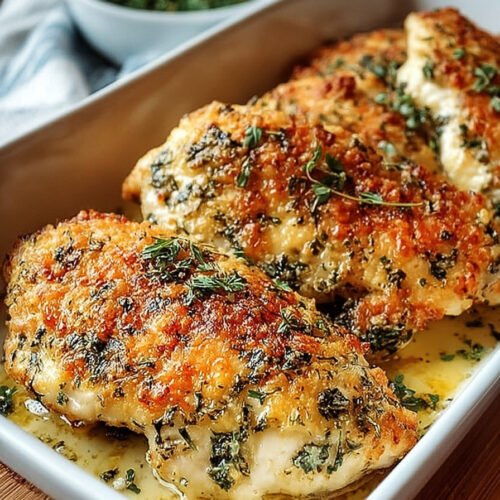
Baked Ranch Chicken for Juicy Oven Dinner
Ingredients
- 4 boneless, skinless chicken breasts or thighs, patted very dry so the ranch coating clings instead of sliding off
- 2 tablespoons olive oil or melted butter, used to carry the seasoning and help the chicken stay moist in the oven
- 3 tablespoons ranch seasoning mix, the main flavor base for a tangy, herby, savory coating
- 1/2 teaspoon garlic powder, for deeper savory flavor without adding moisture
- 1/2 teaspoon onion powder, to round out the ranch seasoning and support browning
- 1/4 teaspoon paprika (optional), for a warmer color and mild earthy flavor
- Salt and black pepper to taste, added carefully because ranch seasoning can already be salty
- 1/4 cup shredded cheddar cheese, sprinkled near the end so it melts without drying out
- 2 tablespoons chopped fresh parsley or chives, added after baking for freshness and color
Instructions
- Preheat your oven to 375°F (190°C) so the chicken cooks evenly from the start; a fully heated oven helps prevent the meat from sitting too long and drying out.
- Rinse the chicken pieces if preferred, then pat them completely dry with paper towels; dry chicken takes on seasoning better and bakes with a cleaner, more flavorful surface.
- In a mixing bowl, combine the olive oil and ranch seasoning, then stir in the garlic powder, onion powder, paprika if using, and a light amount of salt and black pepper. Rub the mixture evenly over every side of the chicken so no thick pockets of seasoning burn.
- Arrange the seasoned chicken in a baking dish with a little space between pieces, then bake for 25–30 minutes, or until the thickest part reaches 165°F (74°C). Start checking early if using thinner chicken breasts because overbaking is the main cause of dry chicken.
- Sprinkle the shredded cheddar cheese over the chicken about 5 minutes before it is done, then return the dish to the oven just until the cheese melts and the chicken reaches its safe internal temperature.
- Let the chicken rest for a few minutes before slicing so the juices settle back into the meat, then garnish with fresh parsley or chives and serve warm.
8) Tips for Making Baked Ranch Chicken
The most important tip is to treat chicken thickness as part of the recipe. Two chicken breasts can look similar but cook differently if one has a much thicker end. For better results, choose pieces close in size or gently press the thicker end until it is more even. This prevents the thin side from drying out before the center reaches a safe temperature.
Use a thin coating rather than a heavy paste. Ranch seasoning is flavorful and salty, so the goal is even coverage, not a thick layer. If the seasoning mixture looks too concentrated in one spot, spread it out before baking. A balanced coating makes the final chicken taste seasoned throughout instead of salty on the surface.
For quick oven chicken recipes, a thermometer is the difference between guessing and cooking with control. Pull the chicken when the thickest part reaches 165°F, then let it rest. The rest helps protect the texture and makes slicing cleaner.
If you want a lighter version for baked food recipes healthy enough for meal planning, use olive oil, chicken breast, and a moderate amount of cheddar. If you want a richer dinner, use melted butter and chicken thighs. Both versions keep the same oven method.
9) Common Mistakes & Fixes
Problem: The chicken tastes dry. Cause: It was baked past 165°F or sliced immediately after baking. Fix: Check the thickest part with a thermometer and rest the chicken for a few minutes before cutting.
Problem: The seasoning tastes too salty in spots. Cause: The ranch mixture was not spread evenly or too much extra salt was added. Fix: Mix the seasoning with oil or butter thoroughly, coat all sides, and add salt lightly because ranch seasoning already contains salt.
Problem: The cheese looks greasy. Cause: It baked for too long or was added at the beginning. Fix: Add cheddar about 5 minutes before the chicken is done so it melts without separating.
Problem: The chicken cooks unevenly. Cause: The pieces were very different in thickness or packed tightly in the dish. Fix: Use similar-sized pieces and leave space between them so heat can circulate.
10) How to Tell Baked Ranch Chicken Is Done
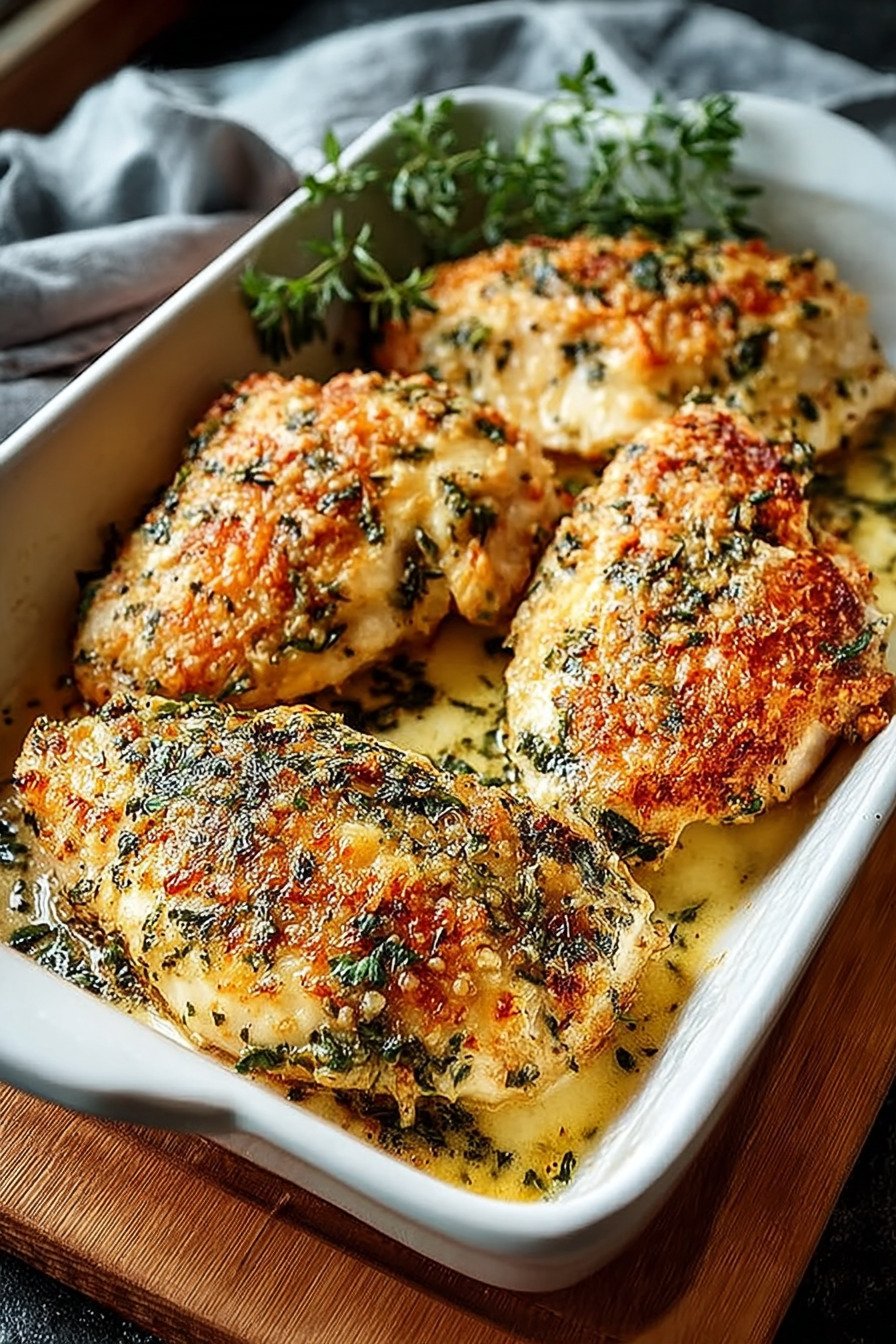
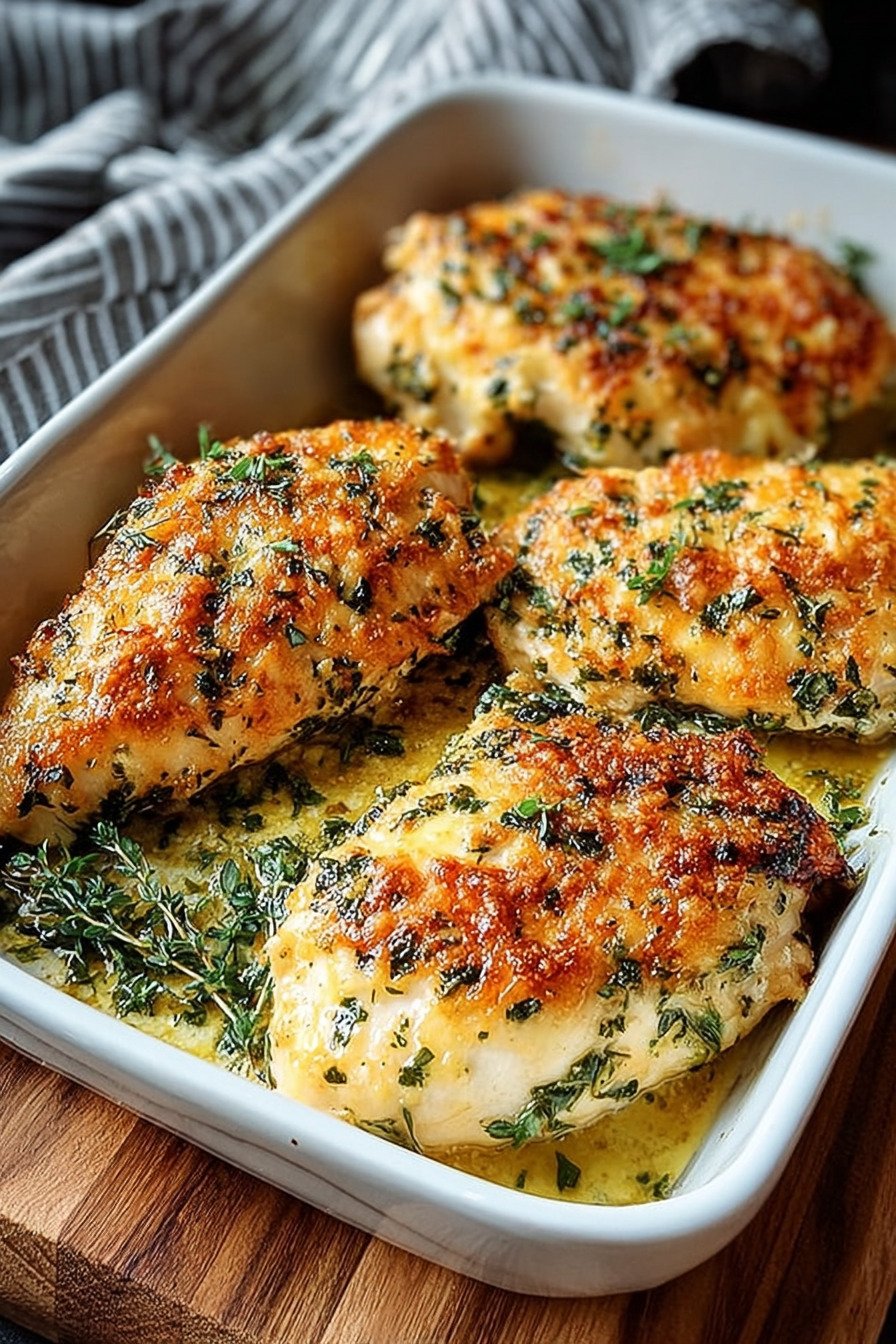
Baked Ranch Chicken is done when the thickest part reaches 165°F and the juices look clear. The outside should have a lightly seasoned surface, not a wet coating sitting in the pan. The cheddar should be melted and soft, not deeply browned or oily. When you press the chicken gently, it should feel firm but not hard.
When sliced, the chicken should look moist and opaque all the way through. The texture should be tender enough to cut cleanly without shredding into dry fibers. A good aroma will be savory, herby, lightly cheesy, and warm from the garlic and onion powders. Failure signs include rubbery edges, a chalky center, watery seasoning pooled around the chicken, or cheese that has separated into oil.
11) Professional Secrets Behind Better Baked Ranch Chicken
Professional-style chicken is rarely about adding more ingredients. It is usually about controlling moisture, seasoning, heat, and rest. Drying the chicken first helps the seasoning cling. Coating the chicken evenly prevents harsh salty patches. Spacing the pieces in the baking dish helps the chicken bake instead of steam heavily in its own moisture.
The cheese timing is another small detail with a big payoff. Cheddar melts quickly, so it should be treated as a finishing layer, not a full-time baking ingredient. When added near the end, it gives you the visual appeal of melted cheese without covering up the ranch flavor or turning greasy.
The final secret is patience after baking. Resting the chicken is not wasted time. It gives the juices a chance to settle, which makes each slice look and taste better. That is why this ranch chicken baked method works well for quick and easy chicken recipes healthy enough for regular dinners but still comforting enough for a family table.
12) Best Dishes or Pairings to Serve With Baked Ranch Chicken
Baked Ranch Chicken pairs well with simple sides because the chicken already carries a savory ranch-cheddar flavor. Roasted broccoli, green beans, carrots, or asparagus keep the plate balanced and add color. A crisp salad with a bright vinaigrette also works well because the acidity cuts through the richness of the cheese.
For a comfort-food plate, serve the chicken with mashed potatoes, baked potatoes, rice, buttered noodles, or a warm dinner roll. For a lighter meal, slice the chicken over a salad bowl or serve it with steamed vegetables and a small portion of grains. Leftover slices also work in wraps, sandwiches, or lunch bowls.
13) Making Baked Ranch Chicken Ahead of Time
You can mix the ranch coating ahead of time and keep it refrigerated until dinner, but coat the chicken close to baking for the cleanest texture. If the chicken sits too long in a salty seasoning mixture, the surface can release moisture and the coating may become watery.
For make-ahead cooked chicken, bake it fully, cool it, and store it in an airtight container. Reheat gently so the meat does not tighten. A low oven is better than high heat because it warms the chicken more evenly. Add a small splash of broth or water to the dish before reheating if the chicken seems dry.
14) Storing Leftover Baked Ranch Chicken
Store leftover Baked Ranch Chicken in an airtight container in the refrigerator for 3 to 4 days. Let it cool before sealing so trapped steam does not create excess moisture around the cheese topping. For best texture, reheat in a covered baking dish at 300°F until warmed through.
You can freeze cooked chicken, but the cheddar topping may change texture slightly after thawing. If freezing, wrap portions tightly and use them within 2 to 3 months. Thaw in the refrigerator overnight before reheating. Leftovers can be sliced into salads, tucked into wraps, chopped into rice bowls, or served with roasted vegetables for a quick lunch.
15) FAQ (Real Cooking Questions)
Can I use chicken thighs instead of chicken breasts? Yes. Boneless, skinless thighs work well and usually stay juicier than breasts. They may need a few extra minutes depending on size, so use the 165°F internal temperature as your guide.
Can I make this without cheddar cheese? Yes. The ranch coating still gives the chicken plenty of flavor. Without cheddar, the surface will be less creamy and rich, but the method stays the same.
Why is my ranch chicken baked recipe too salty? Ranch seasoning blends vary. Some are much saltier than others. Use added salt lightly, taste your finished chicken before adding more, and balance the plate with unsalted sides if needed.
Is this a good dinner to make with chicken breast? Yes, especially when you keep the chicken pieces even in thickness and avoid overbaking. It is one of those baked chicken breast ideas that works because the seasoning is simple but concentrated.
Can I use this for meal prep? Yes. Bake the chicken, cool it, and refrigerate it in portions. Reheat gently or slice it cold for salads and wraps. This keeps the texture better than repeatedly microwaving a whole batch.
16) Save This Baked Ranch Chicken Recipe
If this Baked Ranch Chicken helped you solve dry, bland oven chicken, save it for busy weeknights, family dinners, or meal prep. The key reminder is: coat evenly, bake to 165°F, add cheddar near the end, and rest before slicing.

17) Conclusion
Baked Ranch Chicken becomes much more reliable when you stop treating it like a basic oven dinner and start watching the small details. Dry the chicken, season it evenly, bake it only until done, melt the cheese at the right moment, and give the meat time to rest. Those steps turn a common dry-chicken problem into a practical method you can repeat with confidence.
The beauty of this recipe is that it does not need complicated ingredients to feel useful. It needs timing, temperature awareness, and a coating that works with the chicken instead of sitting on top of it. Once you understand those checkpoints, ranch chicken baked in the oven becomes a dependable dinner instead of a guessing game.
18) Nutrition
Serving Size 1 portion Calories 310 Sugar 1 g Sodium 760 mg Fat 15 g Saturated Fat 5 g Carbohydrates 3 g Fiber 0 g Protein 39 g Cholesterol 125 mg



Leave a Comment